
There is something deeply personal about a kitchen. More than almost any other room in the home, it quietly shapes the rhythm of everyday life. It is where mornings begin before the world fully wakes up, where coffee becomes ritual rather than routine, where conversations happen without planning, and where the ordinary moments of life unfold almost unnoticed. Because of this, the feeling of a kitchen matters far more than people often realise.
For years, kitchens were designed almost entirely around practicality. Function came first, atmosphere second. Spaces became overly polished, overly perfect, and in many cases emotionally cold. But recently, people have started moving toward something different. Instead of kitchens that simply look impressive, they are searching for kitchens that feel calming, grounding, warm, and genuinely lived in.
The modern kitchen aesthetic is no longer just about appearance. It has become deeply connected to lifestyle, emotion, and the desire for slower living. A beautiful kitchen is not simply one with expensive finishes or luxury appliances. It is one that makes everyday routines feel softer and more intentional. It is a space that invites you to stay a little longer, cook a little slower, and enjoy ordinary moments more deeply.
This shift has changed the way people think about home design entirely. Instead of creating spaces for display, people are beginning to create spaces that support the way they actually want to live. Kitchens are becoming calmer, more natural, and less performative. Warm woods are replacing harsh glossy surfaces. Neutral colours are replacing bright clinical whites. Open shelving, soft lighting, organic textures, and natural materials are replacing excessive decoration and visual clutter.
The reason these kitchens feel so appealing is because they reconnect people to something increasingly rare: ease. Modern life is constantly demanding attention. Phones, notifications, work, screens, and endless stimulation leave people mentally exhausted. When the environment around you also feels visually loud or chaotic, true rest becomes difficult. A calm kitchen, however, changes the emotional tone of the entire home.
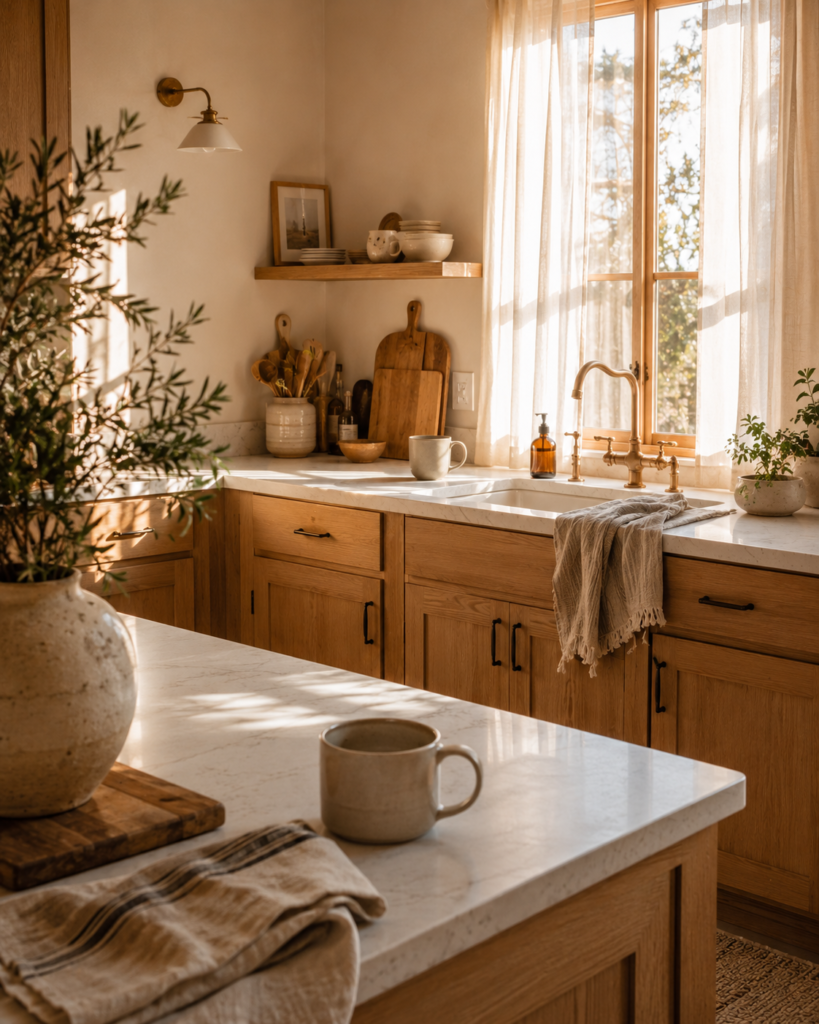
One of the first things that defines a peaceful kitchen aesthetic is simplicity. Not empty minimalism, but thoughtful simplicity. There is a difference between a kitchen that feels intentionally curated and one that feels stripped of personality. The goal is not to remove everything. It is to remove what feels unnecessary so the space itself can breathe.
When countertops are crowded with appliances, packaging, random objects, and clutter, the kitchen immediately feels heavier. Even if the room itself is beautiful, too much visual information creates tension. A calmer space allows the eye to rest naturally. Surfaces feel cleaner, movement through the room feels easier, and everyday tasks become less overwhelming.
This is partly why open shelving has become so popular in aesthetic kitchens. When done intentionally, it creates openness and softness rather than heaviness. Neutral ceramic bowls, glass jars, wooden cutting boards, and natural textures displayed thoughtfully can make a kitchen feel warm and personal without feeling cluttered.
Pieces similar to the Yamazaki Tosca Wooden Handle Storage Basket work beautifully in these spaces because they help organise everyday items while still contributing to the overall aesthetic. Instead of hiding functionality completely, intentional kitchens integrate it naturally into the design.
Colour also plays a major role in shaping how a kitchen feels emotionally. The most calming kitchens tend to rely on earthy, natural palettes rather than high contrast or harsh tones. Warm whites, soft greys, clay colours, muted greens, sandy beige tones, and natural wood finishes all create a sense of calm because they mirror colours found in nature.
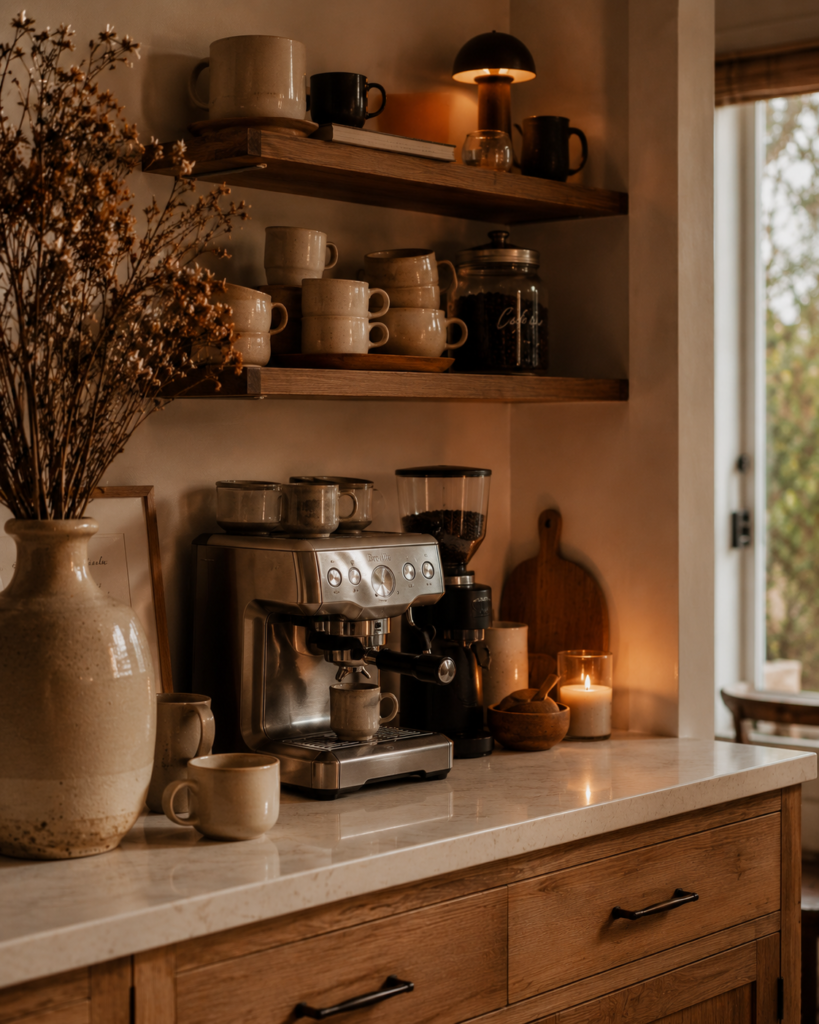
These tones also age better over time because they do not rely on trends or dramatic statements. A kitchen built around soft natural colours tends to feel timeless, allowing the space to evolve gradually instead of feeling outdated within a few years.
Lighting changes everything as well. Many kitchens rely heavily on bright overhead lighting, which often creates a sterile atmosphere. Softer layered lighting completely transforms the emotional tone of the space. Warm pendant lights above a kitchen island, small lamps on countertops, under-cabinet lighting, and natural daylight create a softer environment that feels more welcoming and less clinical.
Morning light in particular has an incredible effect on kitchen spaces. Sunlight reflecting off natural wood surfaces, ceramic textures, and soft neutral colours creates warmth that artificial lighting simply cannot replicate. This is why kitchens with large windows, sheer curtains, or open layouts often feel calmer immediately.
Natural materials are at the heart of almost every aesthetic kitchen because they create warmth instinctively. Wood introduces softness and texture. Stone creates grounding and permanence. Linen softens hard edges. Ceramic adds subtle imperfection that makes spaces feel human rather than staged.
Simple additions like wooden utensils displayed in ceramic holders, stoneware mugs, linen tea towels, or woven baskets can completely shift the atmosphere of a kitchen. These details may seem small individually, but together they create emotional warmth that makes the space feel genuinely lived in.
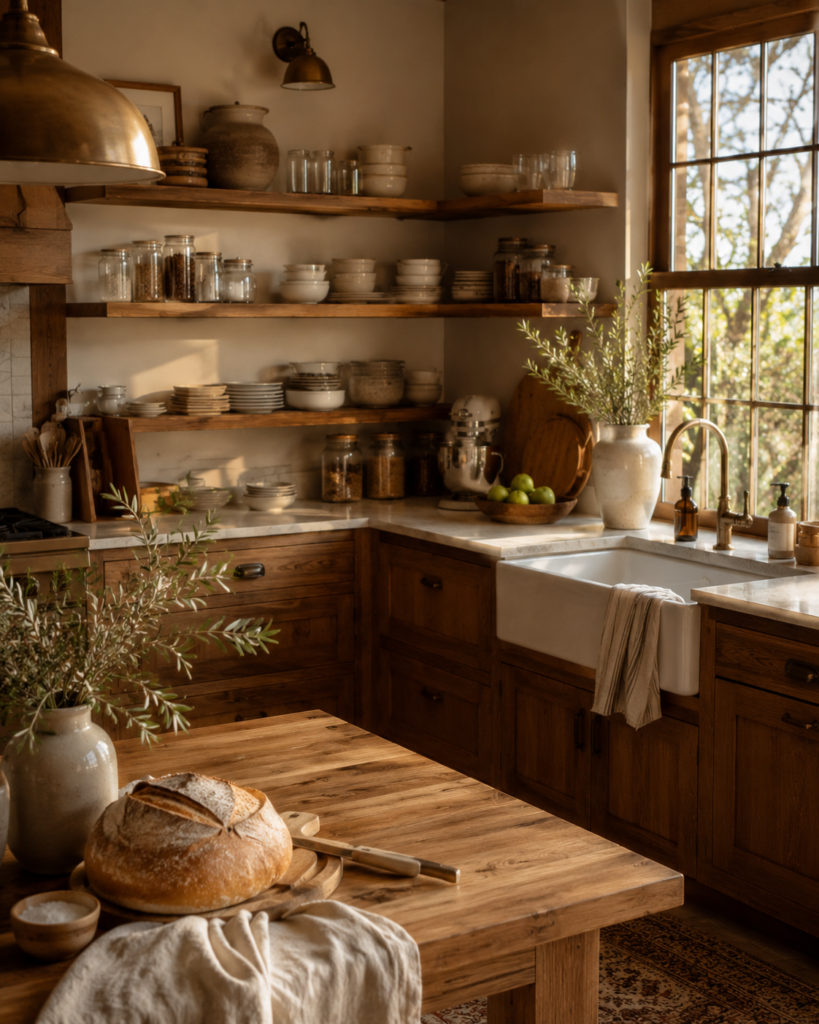
The rise of handmade and artisan-inspired kitchen pieces reflects this shift toward warmth and authenticity. People are increasingly drawn to objects that feel tactile, imperfect, and organic because they contrast with the overly polished environments that dominated design trends for years.
Even functional objects can contribute to the atmosphere of the room when chosen thoughtfully. Something as simple as the Le Creuset Enameled Cast Iron Dutch Oven has become iconic not just because it performs well, but because it brings visual warmth and timeless character into a kitchen. Left on a stovetop or open shelf, it becomes part of the aesthetic naturally rather than needing to be hidden away.
This blending of beauty and practicality is central to intentional kitchen design. The most calming kitchens are not spaces designed purely for photographs. They are spaces designed to support everyday life beautifully.
Texture is another essential part of creating depth and comfort within a kitchen. Smooth glossy surfaces everywhere can make a room feel flat and cold. Layering textures through wood grain, linen fabrics, matte ceramics, woven materials, and stone surfaces introduces softness that makes a kitchen feel warmer and more inviting.
Open shelving filled with neutral ceramic bowls, hand-thrown mugs, glass jars of pantry staples, and wooden serving boards creates a sense of quiet character without becoming overwhelming. These objects feel calming because they are both useful and beautiful simultaneously.
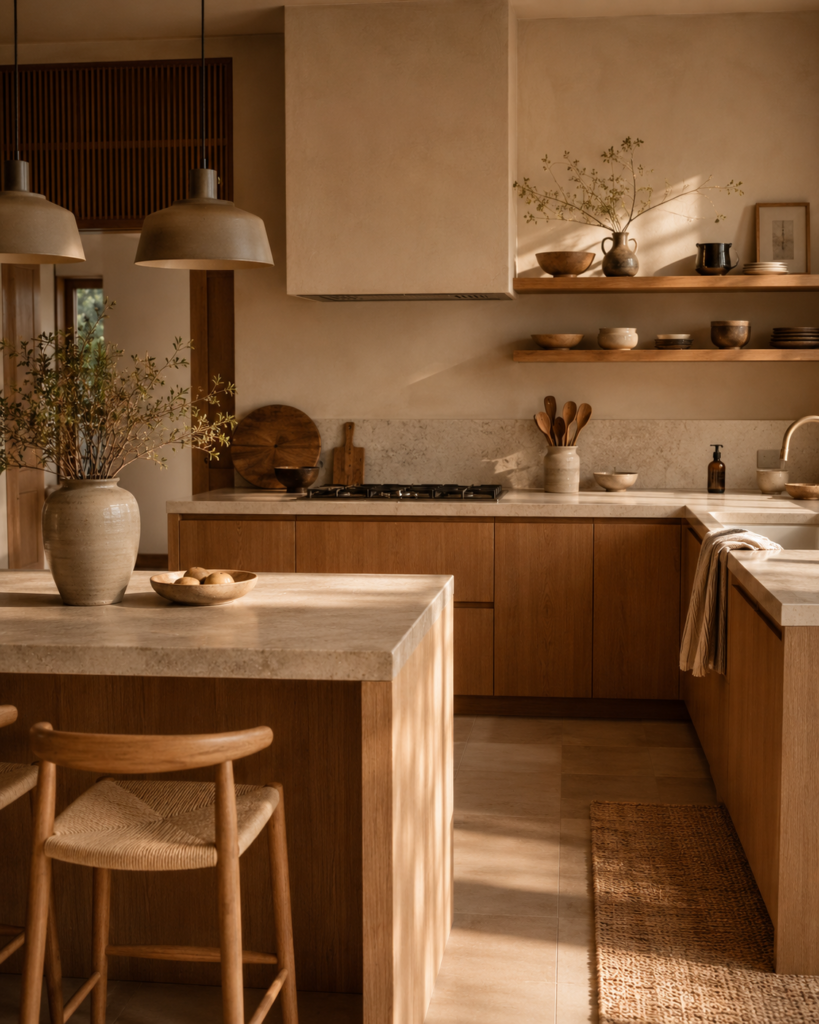
Aesthetic kitchens also tend to prioritise slower rituals. Coffee becomes something to savour rather than rush through. Cooking becomes calming instead of stressful. Even simple tasks like preparing breakfast or washing dishes feel softer in environments designed thoughtfully.
This emotional aspect of kitchen design is often underestimated, but it may actually be the most important part. People do not simply remember what a kitchen looked like. They remember how it felt. Warm. Calm. Welcoming. Quiet. Comfortable.
Because kitchens are tied so closely to routine, they influence emotional wellbeing continuously. A stressful or cluttered kitchen subtly affects mood every single day. Likewise, a peaceful kitchen creates small moments of calm repeatedly throughout everyday life.
The rise of slow living and intentional lifestyle content online has amplified this idea significantly. More people are realising that beauty does not need to exist separately from everyday routines. In fact, the most meaningful forms of beauty are often the ones integrated into ordinary life naturally.
This is why aesthetic kitchen content performs so well on platforms like Pinterest and Instagram. People are not just looking at cabinets and countertops. They are imagining how life would feel within those spaces. They are imagining slower mornings, calmer evenings, fresh coffee in soft sunlight, cooking dinner without stress, and homes that feel grounding rather than overwhelming.
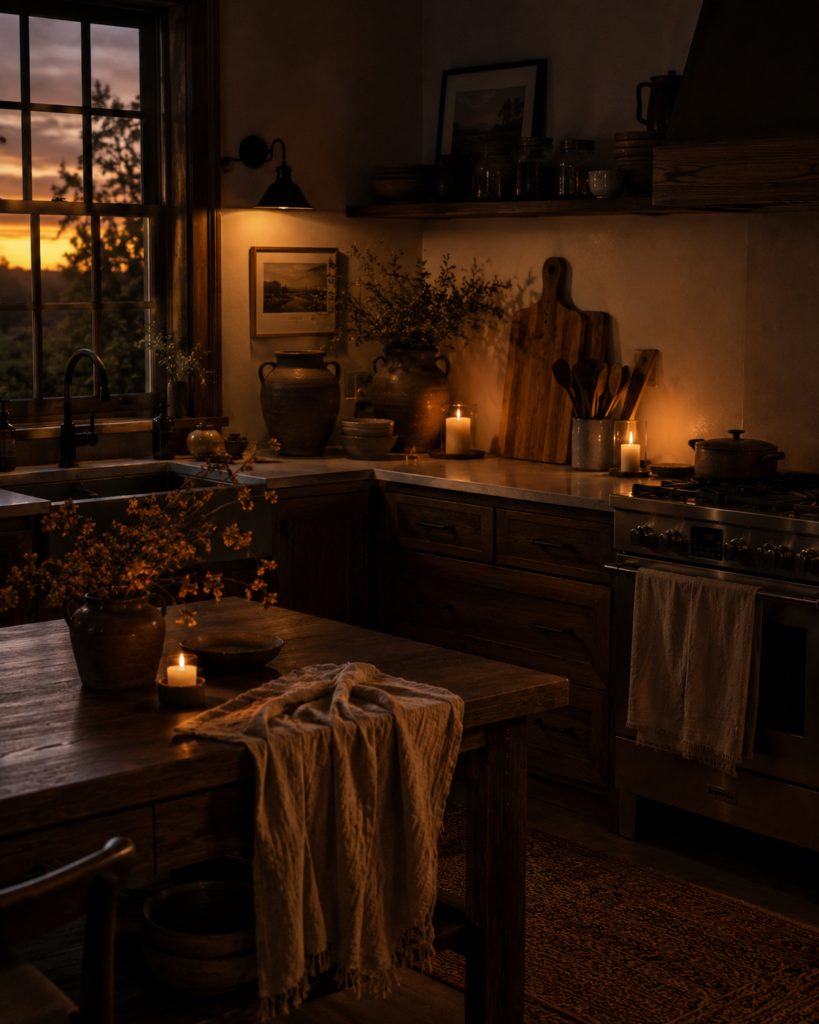
Appliances themselves are beginning to reflect this shift as well. Instead of purely industrial-looking kitchen tools, people are increasingly drawn toward pieces that combine functionality with aesthetic warmth. Even coffee machines, kettles, and toasters are being chosen based on how well they integrate into calm interior spaces.
The Smeg Retro Style Electric Kettle, for example, has become extremely popular because it combines everyday practicality with soft vintage-inspired design. In aesthetic kitchens, even small appliances contribute to the atmosphere rather than disrupting it visually.
Plants also play an important role in softening kitchen spaces. Fresh herbs on windowsills, olive branches in ceramic vases, hanging greenery, or small potted plants instantly introduce life and movement into the room. Greenery breaks up hard surfaces naturally and creates freshness that makes kitchens feel healthier and more grounded.
Simple ceramic planters like the Mkono Ceramic Planter Set integrate beautifully into warm neutral kitchens because they feel understated and organic rather than decorative for the sake of decoration. Again, subtlety matters more than excess.
One of the reasons kitchen aesthetics have become so emotionally important is because people are spending more time at home than ever before. Home is no longer simply where life happens between activities elsewhere. It has become the centre of daily experience. Because of this, the emotional quality of home environments matters deeply.
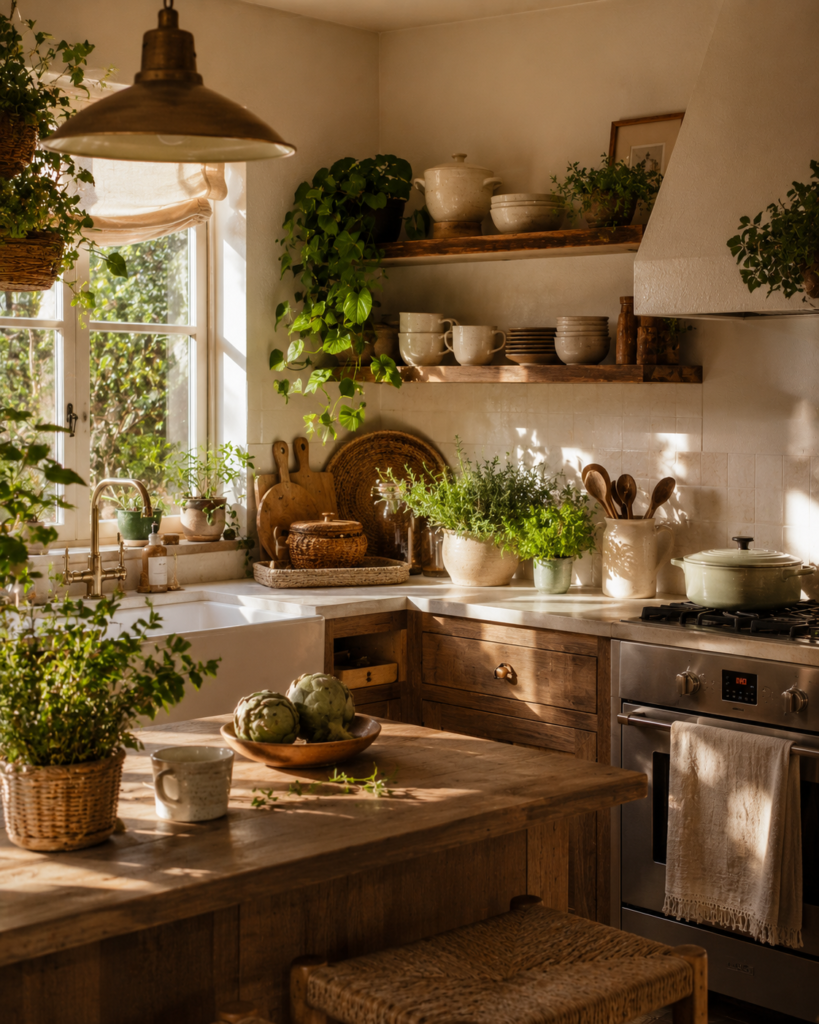
Kitchens in particular often become gathering points naturally. Friends stand around islands while talking. Families move through the space constantly throughout the day. Quiet moments happen there repeatedly. This means the atmosphere of the kitchen influences not only individual wellbeing but the emotional tone of the household itself.
The best kitchen aesthetics are therefore not rigidly styled. They feel relaxed, effortless, and adaptable. They leave room for life to happen naturally instead of trying to control every detail visually.
This is why overly perfect kitchens can sometimes feel strangely uncomfortable. When spaces feel too pristine, people become afraid to use them naturally. Intentional kitchens, however, feel welcoming precisely because they are designed around real life rather than perfection.
Textiles soften kitchens dramatically as well. Linen curtains, woven runners, soft tea towels, and textured cushions on dining chairs all introduce warmth into spaces that would otherwise feel dominated by hard surfaces. These softer elements create balance and make kitchens feel emotionally comfortable rather than purely functional.
The European Linen Waffle Weave Kitchen Towels are a good example of small details that quietly elevate the atmosphere of a kitchen. Functional objects chosen intentionally contribute to the overall feeling of the space in subtle but important ways.
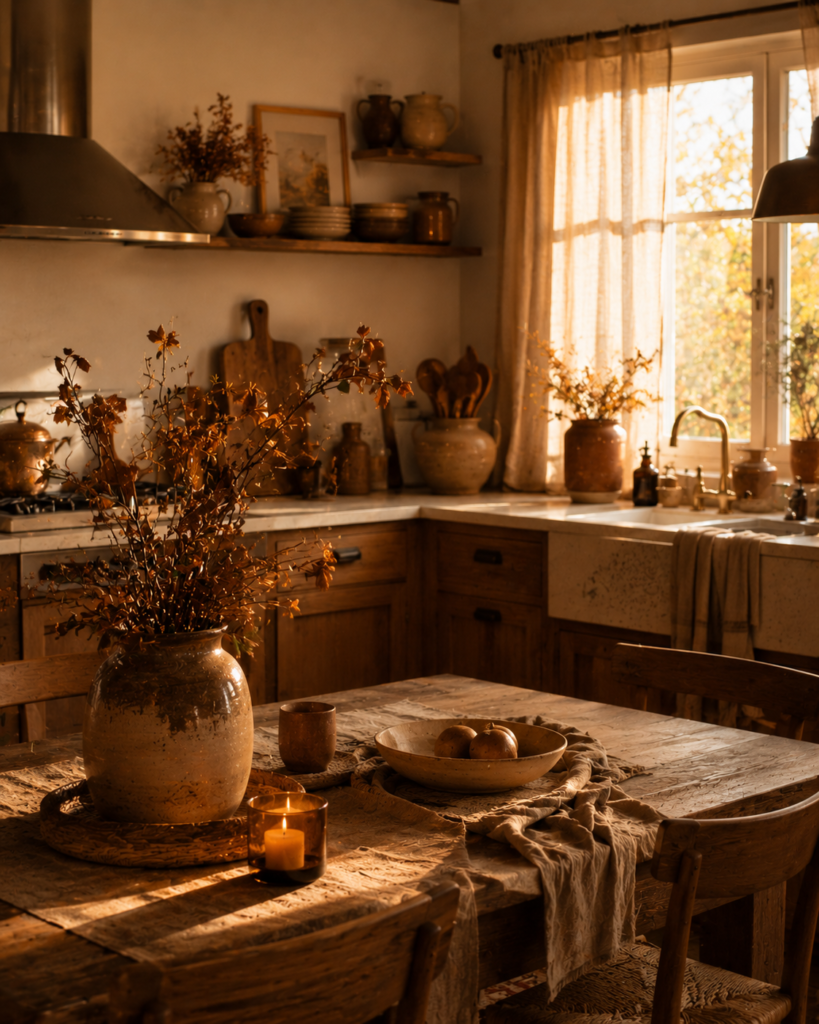
Another reason aesthetic kitchens resonate so strongly is because they connect people to slower rhythms that feel increasingly rare. Baking bread, brewing coffee slowly, preparing meals from scratch, arranging fresh flowers, lighting candles in the evening — these rituals feel grounding because they require presence and attention.
A calm kitchen supports these moments naturally. It encourages slower living without forcing it artificially. The space itself gently influences behaviour through atmosphere.
Interestingly, some of the most beautiful kitchens are actually the simplest. They are not filled with endless accessories or expensive statement pieces. Instead, they rely on balance, warmth, texture, and thoughtful restraint. Natural wood cutting boards leaning casually against a backsplash. Ceramic bowls stacked openly on shelves. A linen cloth draped naturally over a countertop. Olive branches in a handmade vase. These details feel beautiful because they feel real.
This authenticity matters because people are becoming increasingly sensitive to environments that feel overly curated or artificial. Spaces that feel genuinely lived in are often far more emotionally appealing than spaces designed purely for visual impact.
Aesthetic kitchens also tend to evolve gradually rather than appearing instantly finished. Objects are collected over time. Materials age naturally. Small details shift with seasons and routines. This organic evolution makes spaces feel more personal and emotionally connected to the people who live there.
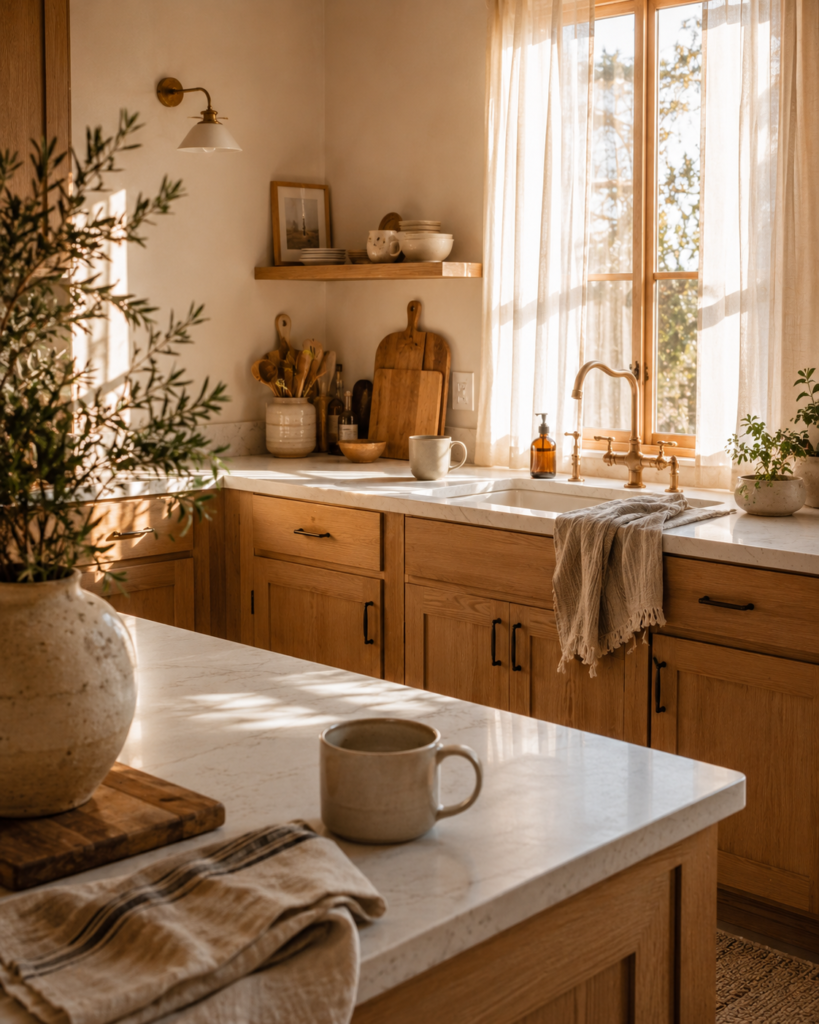
There is also comfort in timelessness. Kitchens designed around warm neutrals, natural materials, soft lighting, and intentional simplicity rarely feel outdated because they are rooted in emotional comfort rather than temporary design trends.
This is perhaps why earthy kitchens have become so popular recently. They create a sense of grounding in an increasingly digital and overstimulating world. Natural colours, tactile materials, warm textures, and quiet spaces remind people of something slower and more human.
At its core, the modern kitchen aesthetic is not really about kitchens at all. It is about the kind of life people want to create around them. A slower life. A softer home. A more intentional relationship with everyday routines.
The environment around you shapes your experience continuously. When your kitchen feels calming and supportive, ordinary moments become more enjoyable automatically. Morning coffee tastes better. Cooking feels less stressful. Even cleaning feels softer in spaces that feel warm and inviting.
This is the true power of thoughtful design. Not impressing guests or following trends, but improving the quality of everyday life quietly and consistently.
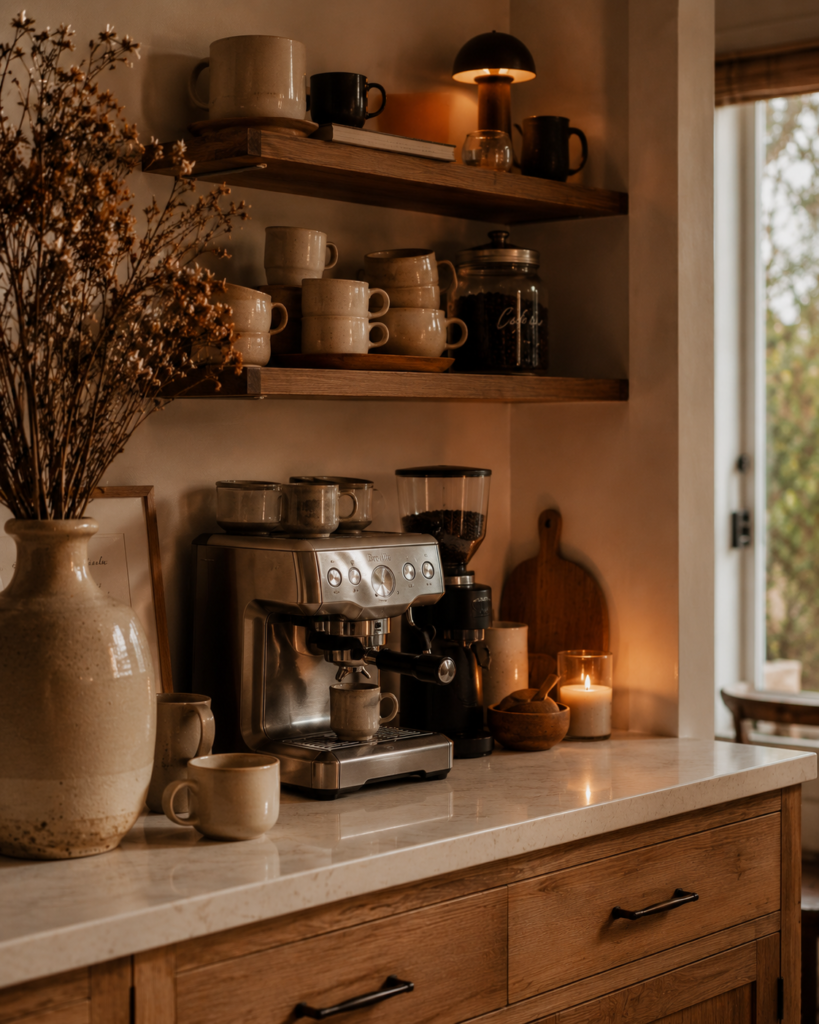
A kitchen should not feel like another source of pressure or visual overload. It should feel grounding. Welcoming. Warm. A place where life unfolds naturally and comfortably.
And perhaps that is why aesthetic kitchens resonate so deeply right now. In a fast and exhausting world, people are searching for spaces that help them slow down again.