
There is a certain kind of space that doesn’t try to impress you, and yet it stays with you long after you’ve left it. It isn’t filled with bold statements or carefully staged perfection. It doesn’t rely on trends, nor does it feel like it belongs to a specific moment in time. Instead, it carries a quiet presence. The kind that allows you to exhale without thinking about it. The kind that softens your attention and gently pulls you out of whatever pace you were moving at before you entered.
Most people, whether they realise it or not, are searching for this feeling in their own homes. Not something dramatic or styled for display, but something deeply personal. A space that feels like a return point. A place that doesn’t ask anything from you, doesn’t demand your energy, and doesn’t overwhelm your senses. Just a place to exist, comfortably and without friction.
The living room, more than any other area, becomes the centre of that experience. It is where your day begins slowly or ends quietly. It is where you sit without purpose, where you pause between moments, where you spend time without needing to justify it. Because of this, the way a living room feels matters far more than how it looks. And yet, most people approach it the other way around.
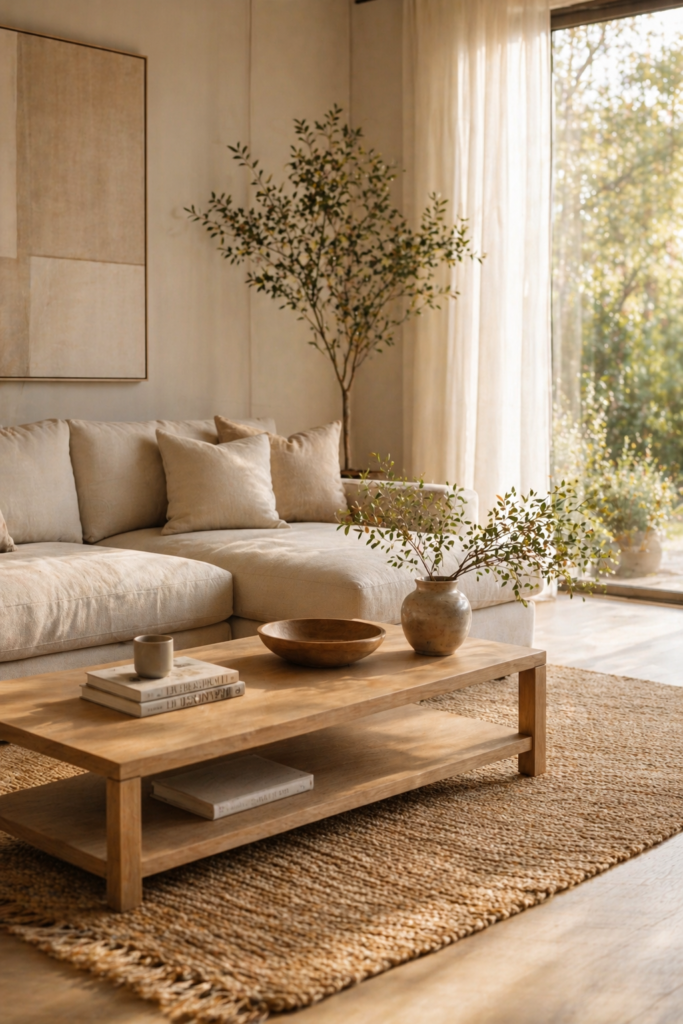
They begin with images. With ideas of what a space should resemble. They gather inspiration, often from beautifully curated environments that were never designed to be lived in. These spaces are created to be viewed, not experienced. And while they can offer direction, they rarely translate into something that feels natural in everyday life.
Creating a space that feels calm begins somewhere else entirely. It begins with awareness. With paying attention to how environments affect you. With noticing the difference between a room that feels easy to be in and one that subtly drains your energy. That awareness becomes the foundation for every decision that follows.
When you shift your focus from appearance to feeling, the process becomes much simpler. Instead of asking what you need to add, you begin to notice what feels unnecessary. Instead of trying to create something impressive, you start shaping something supportive. And over time, those small shifts begin to transform the entire space.
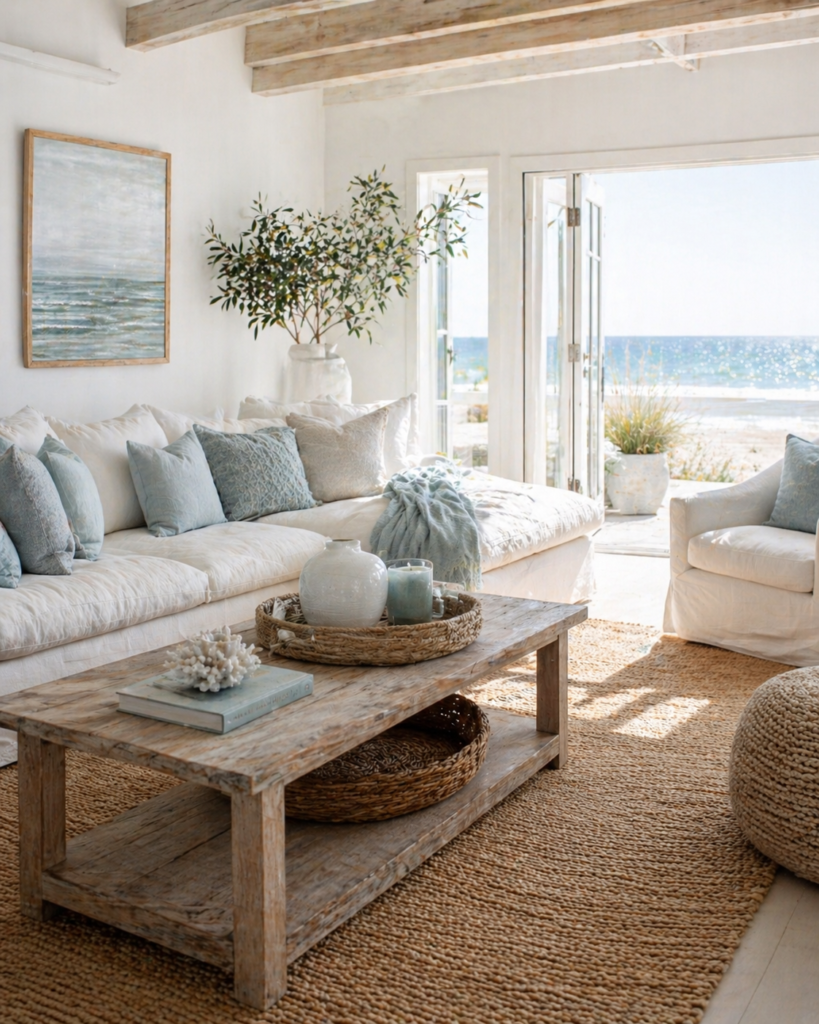
One of the most important and often overlooked elements in this process is space itself. Not in the sense of square footage, but in the way a room is allowed to breathe. Many living rooms feel overwhelming not because they contain the wrong items, but because they contain too many of them. Every surface is filled, every corner is occupied, and the eye has nowhere to rest.
Allowing space to exist within a room is not a sign that something is missing. It is what gives everything else meaning. When there is room around an object, it becomes more noticeable. When surfaces are not crowded, the entire environment feels lighter. This kind of restraint is not about minimalism as a trend, but about creating a sense of ease that can be felt immediately upon entering the space.
Colour plays a similar role, though often in a more subtle way. The tones you surround yourself with shape your perception continuously, even when you are not consciously aware of it. Bright, high-contrast colours tend to stimulate and energise. They can be useful in certain environments, but in a living room designed for rest, they often create a sense of tension.
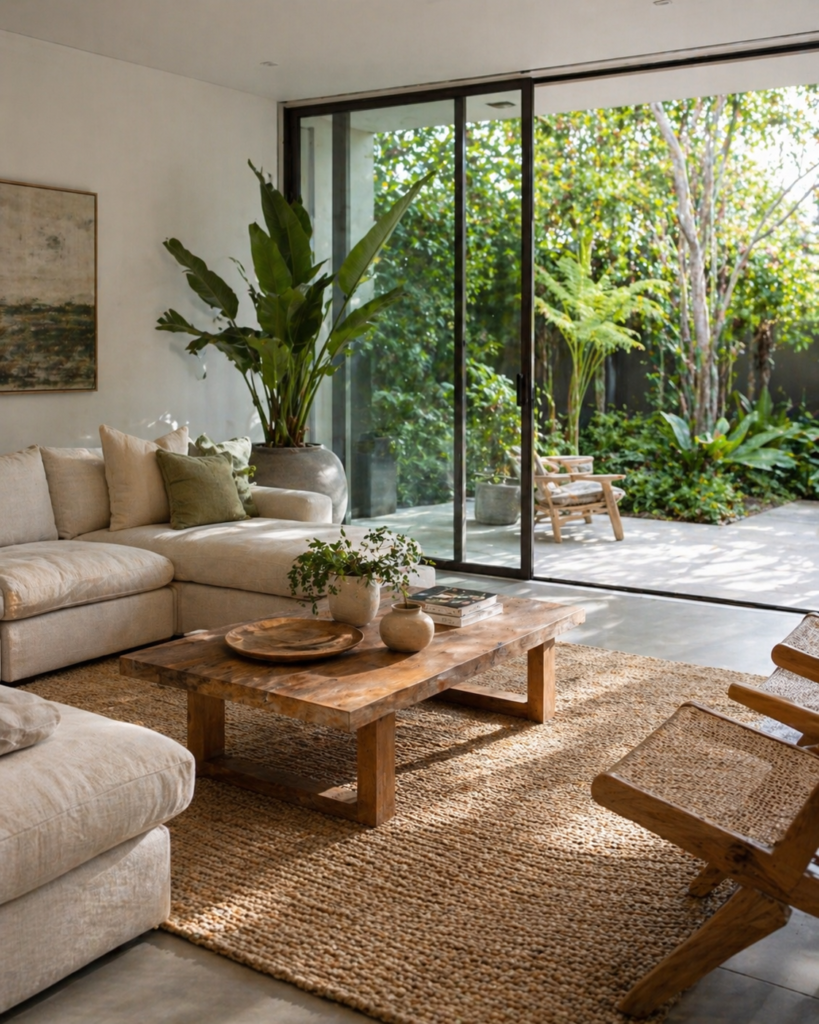
Softer, more natural tones work differently. Warm whites, gentle beiges, muted greens, and earthy neutrals do not demand attention. They sit quietly in the background, allowing the space itself to feel cohesive. These colours mirror the natural world, which is why they tend to feel grounding rather than overwhelming. When layered thoughtfully, they create a sense of continuity that allows the room to feel complete without feeling busy.
Alongside colour, the materials you choose begin to shape the atmosphere in a more tactile way. Natural textures carry a presence that synthetic materials often lack. Wood introduces warmth. Linen softens edges. Cotton feels breathable and relaxed. Ceramic brings a sense of imperfection that makes a space feel human rather than staged.
Even a single element can begin to shift the tone of a room. A textured rug, for example, does more than cover the floor. It creates a foundation that everything else rests on. A piece like the Safavieh Natural Fiber Collection Jute Area Rug quietly grounds the space, adding depth without drawing attention to itself. It becomes part of the environment rather than an object within it.
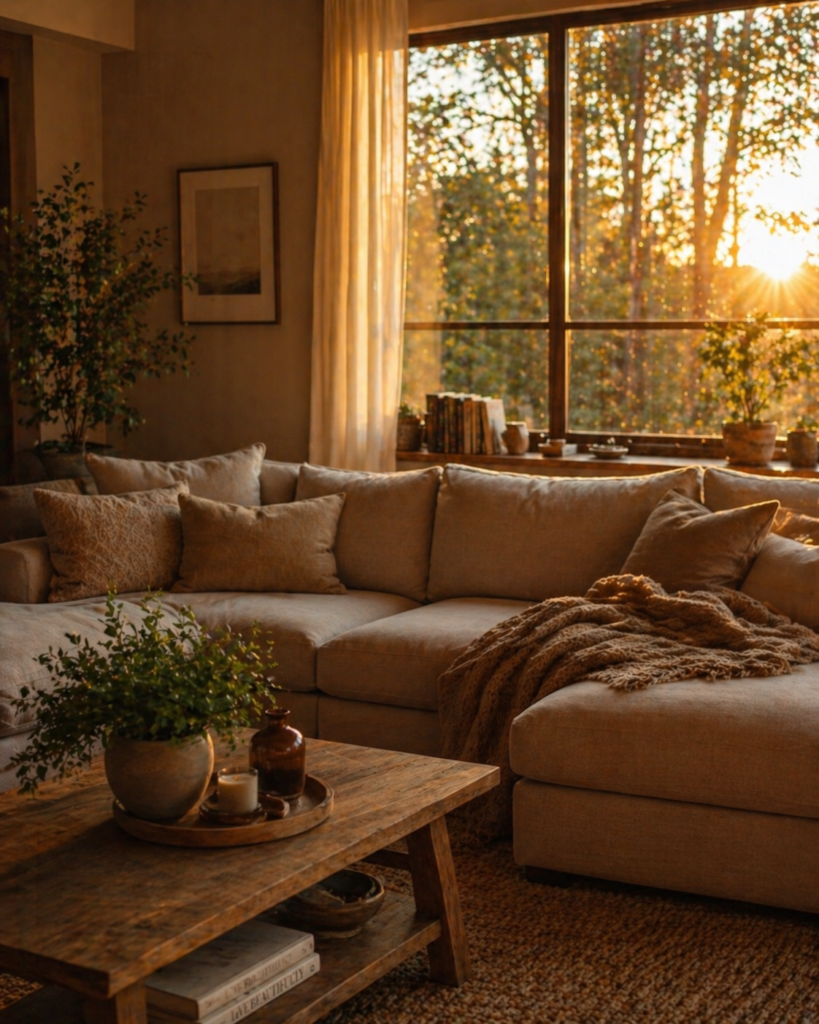
From there, attention naturally moves toward the central element of the living room, the place where comfort is either supported or compromised. Seating is often chosen based on appearance alone, but its true value lies in how it feels over time. It is where your body returns at the end of the day, where you settle without thinking, where moments of rest actually happen.
A piece like the Artiss 275cm Modular Sofa Bed works in this kind of space because it aligns with the overall intention rather than competing with it. Its softness, depth, and neutral tone allow it to integrate seamlessly into the room, while still offering the kind of comfort that becomes noticeable only through experience. It is not something that demands attention, but something that quietly improves how the space is lived in.
Lighting continues this process in a way that is often underestimated. Natural light, in particular, introduces a sense of movement that cannot be replicated artificially. As it shifts throughout the day, it changes the mood of the room in subtle but meaningful ways. Morning light feels soft and expansive. Midday light brings clarity. Evening light creates warmth and calm.
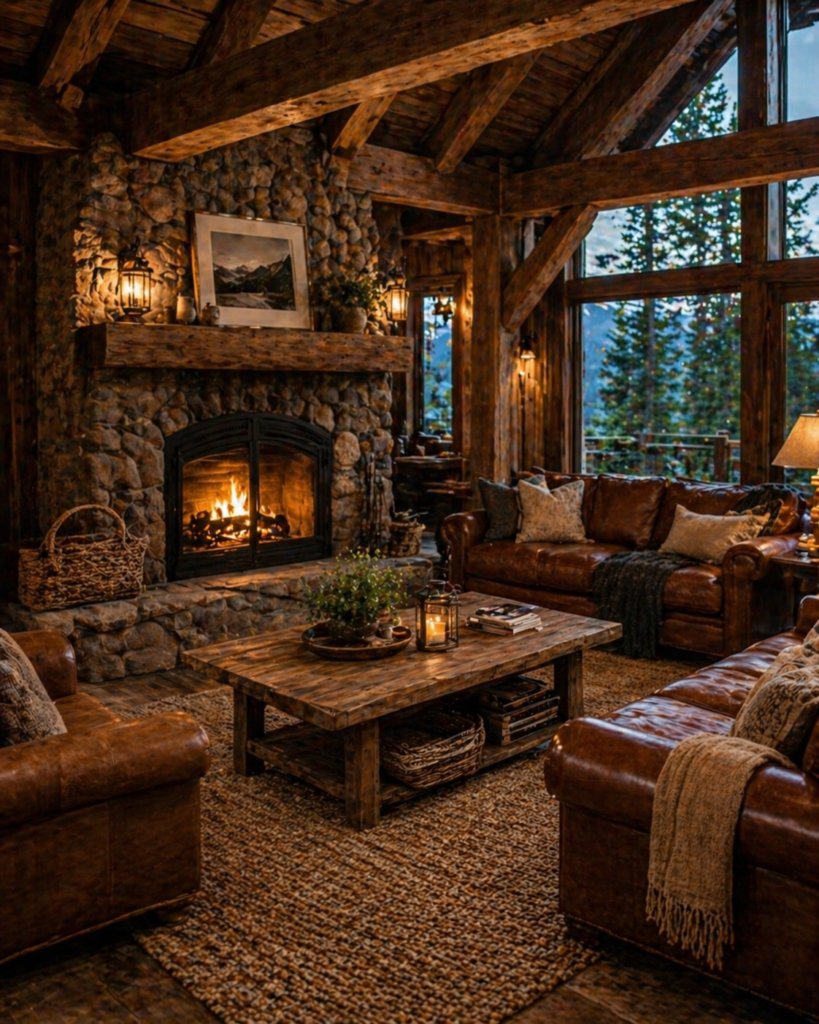
Allowing that light to enter freely can transform a space without adding anything at all. Sheer fabrics, such as those found in the NICETOWN White Sheer Curtains, diffuse sunlight gently, softening its intensity while maintaining its presence. The result is a room that feels naturally illuminated rather than artificially lit.
As the day moves into evening, the transition to softer, warmer light becomes essential. Harsh overhead lighting often disrupts the calm that has been created during the day. Instead, smaller, indirect light sources help maintain a sense of continuity. Lamps placed thoughtfully around the room create pockets of warmth that invite relaxation rather than stimulation.
Beyond light and structure, the presence of living elements begins to shape the emotional tone of the space. Plants introduce a form of life that static objects cannot replicate. They grow, change, and respond to their environment. Even a small amount of greenery can shift the way a room feels, adding softness and movement in a way that feels natural rather than designed.
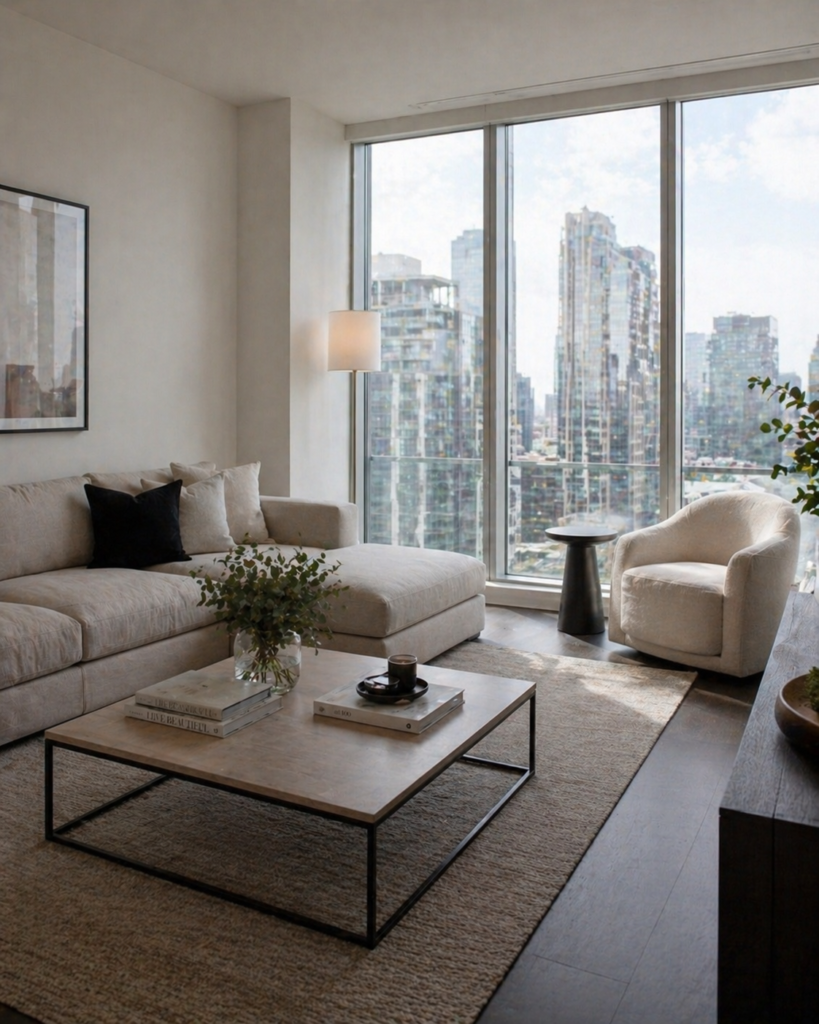
Using simple, understated containers like the Mkono Ceramic Plant Pot Set allows plants to integrate into the space without becoming overly decorative. They remain part of the environment rather than standing out as features.
As these foundational elements come together, the role of layering becomes more important. A calm space is not empty, but it is intentional. Soft textiles, subtle variations in texture, and carefully chosen additions create depth without creating clutter. A throw placed casually over a sofa, such as the Bedsure Linen Textured Throw Blanket, adds warmth both visually and physically. It suggests comfort without needing to be arranged perfectly.
What begins to emerge is a space that feels lived in rather than styled. A space where everything has a place, not because it was arranged that way for appearance, but because it fits naturally into how the room is used.
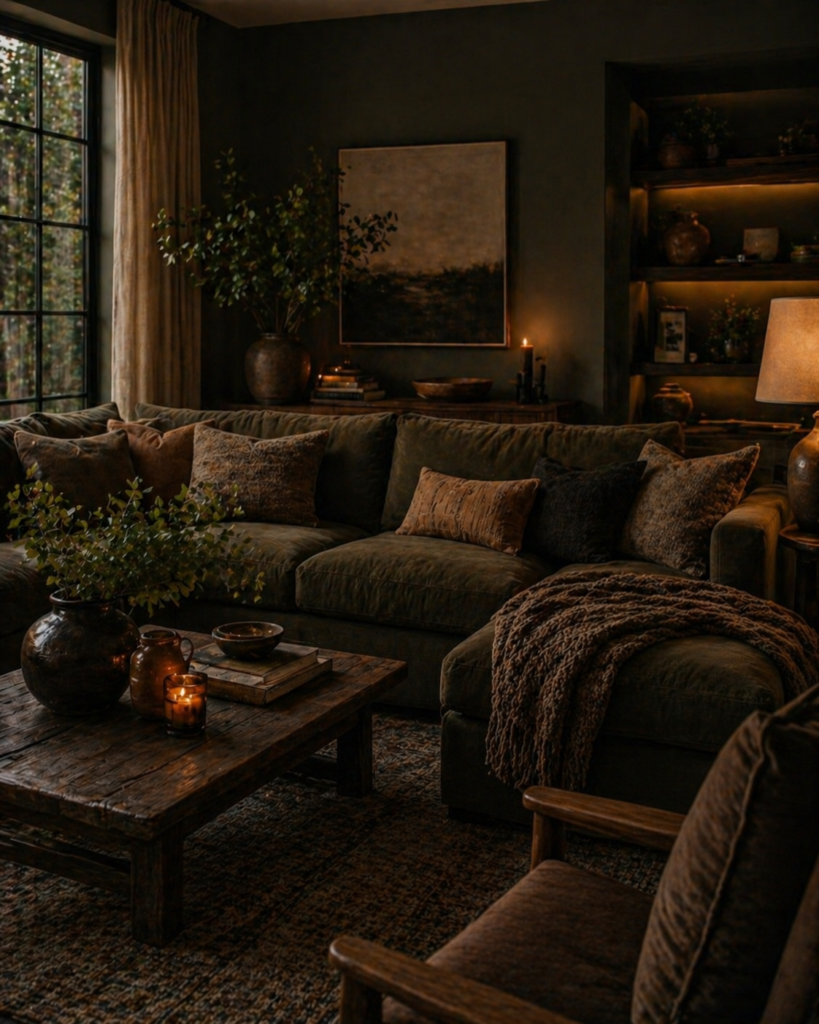
Over time, these small decisions accumulate. The room becomes quieter. More cohesive. Easier to be in. And perhaps most importantly, it begins to reflect something beyond design. It reflects a way of living that values calm over stimulation, presence over distraction, and simplicity over excess.
This is not something that happens all at once. It is a gradual process. A series of small adjustments that shift the tone of the space over time. There is no final version, no perfect outcome. Only a continuous refinement based on what feels right.
And that is what makes it sustainable.
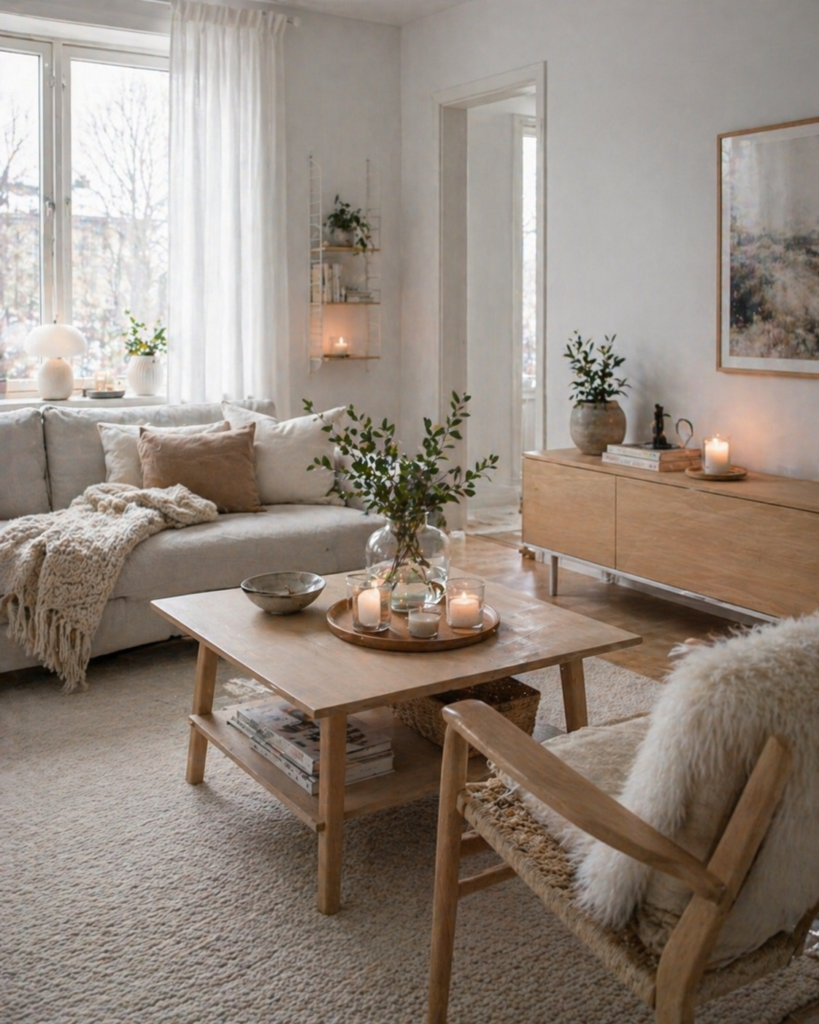
Because when your space is built around how you want to feel, rather than how you think it should look, it becomes something that evolves with you. It remains relevant not because it follows trends, but because it is rooted in something deeper.
A well-designed living room does not exist to impress. It exists to support. To hold space for your life as it is, without needing to be anything more.
And in a world that constantly demands your attention, your energy, and your time, having a place that offers the opposite is not just desirable.
It is essential.