
For years our homes were expected to do everything. They became offices, gyms, classrooms, entertainment centres and places where we tried to squeeze every aspect of life into one building. While technology made many things easier, it also created a world that rarely slows down. Notifications never stop, trends change overnight and endless scrolling often leaves people feeling more overwhelmed than inspired.
That is exactly why one design movement has quietly become one of the biggest lifestyle trends of 2026.
It’s called Slow Living, and unlike fast-moving decorating trends that disappear after a season, this one is changing the way people think about their homes altogether.
Instead of decorating for social media, people are decorating for themselves. Instead of buying dozens of inexpensive pieces that quickly lose their appeal, they’re investing in fewer items they genuinely love. Rather than filling every empty corner, they’re embracing space, natural textures and meaningful objects that create a sense of calm.
The slow living home isn’t about perfection.
It’s about creating a place where life feels easier.
Whether you live in a tiny apartment, a suburban family home or a converted van, the principles remain the same: simplify, reconnect with nature and surround yourself with pieces that make everyday life more enjoyable.
In this guide we’ll explore exactly why slow living has become one of the year’s biggest interior trends, how to incorporate it into your own home and the small design choices that make the biggest difference.
What Is Slow Living?
Slow living isn’t simply another decorating style.
It’s a mindset.
At its heart, slow living encourages people to be intentional with the way they spend their time, energy and money. Rather than constantly chasing the next trend, it focuses on creating routines and environments that encourage presence, comfort and wellbeing.
Your home plays a huge role in this philosophy.
Think about how different you feel walking into:
- a cluttered room with harsh lighting
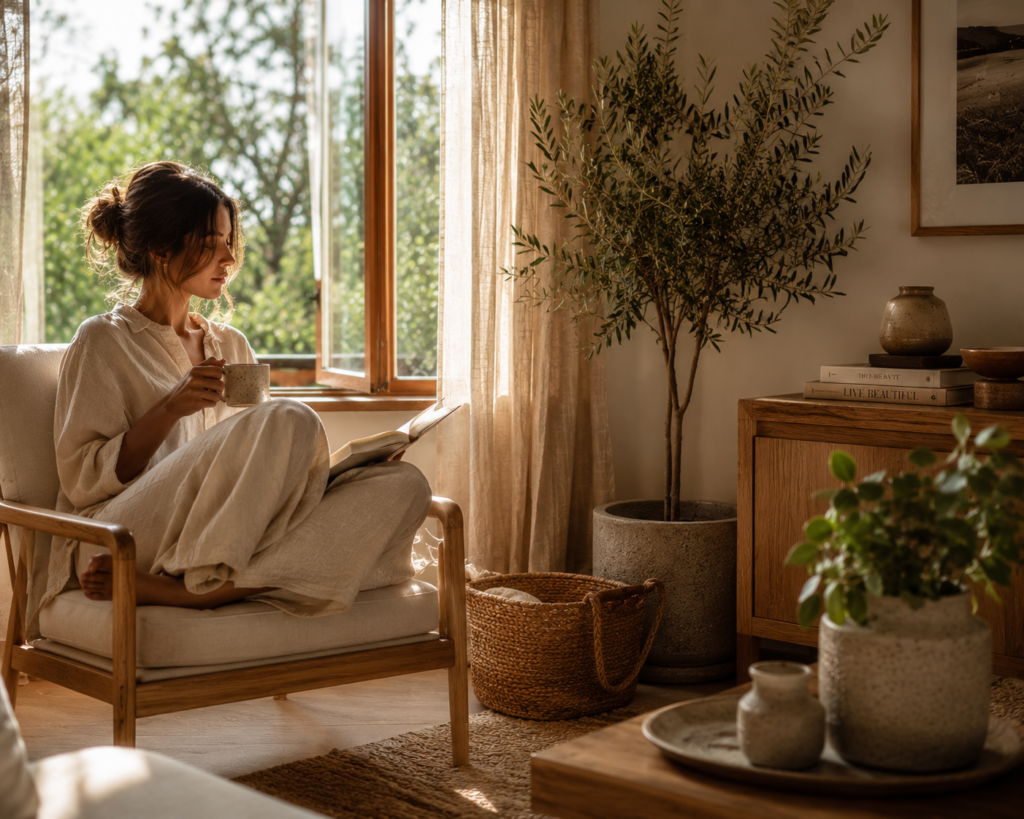
- a calm room filled with warm timber, plants and soft natural light
The second space immediately tells your brain it’s safe to relax.
That’s why slow living design focuses heavily on natural materials, neutral colours, gentle lighting and functional layouts.
The goal isn’t to impress visitors.
The goal is to create a home that helps you feel your best every day.
Why This Trend Is Growing So Quickly
Several factors have pushed slow living into the mainstream.
People are spending more time at home than ever before.
Remote work remains common.
Rising living costs have encouraged people to invest in quality rather than quantity.
Many homeowners are choosing timeless décor over constantly replacing furniture to keep up with trends.
Environmental awareness has also become a major influence.
Consumers increasingly want products that last years instead of months.
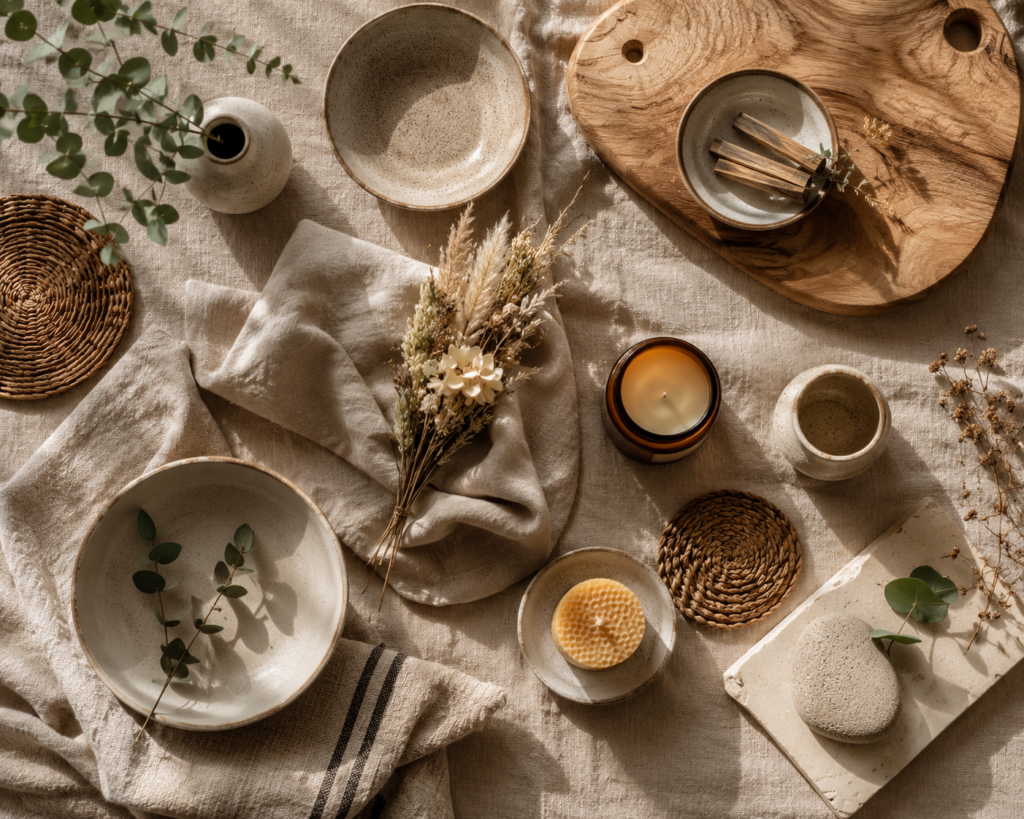
Rather than filling homes with disposable décor, many people now prefer handcrafted ceramics, wooden furniture, linen textiles and vintage finds that develop character over time.
Social media has helped spread the movement too.
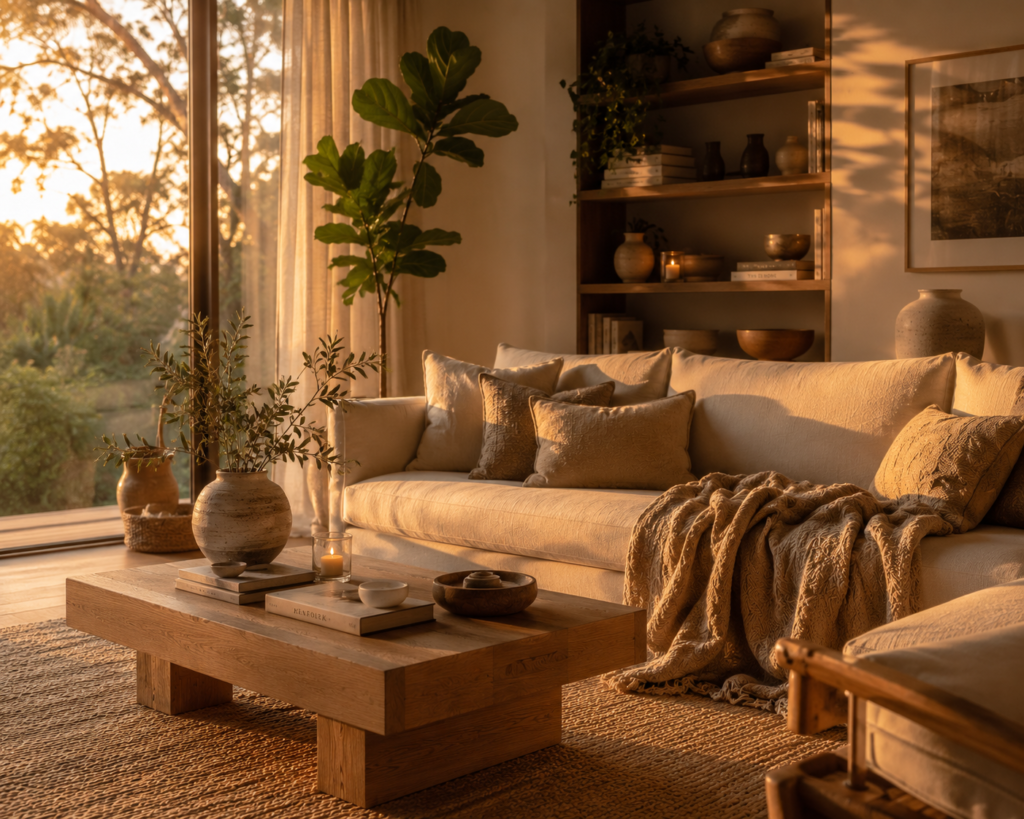
Platforms like Pinterest and Instagram are filled with calming spaces featuring warm timber, cream textiles, indoor plants and carefully curated shelves that feel peaceful rather than crowded.
These homes aren’t necessarily expensive.
They’re intentional.
The Colours Defining Slow Living
Colour has an enormous impact on mood.
Instead of bright whites and cool greys, slow living embraces colours inspired by nature.
Popular shades include:
- Warm white
- Oatmeal
- Sand
- Mushroom
- Clay
- Olive green
- Sage
- Terracotta
- Soft charcoal
- Natural timber tones
These colours reflect landscapes rather than fashion.
Think of Australian beaches, forests, mountain ranges and native bushland.
Because these colours occur naturally together, they also work beautifully together indoors.
The result feels balanced without requiring constant updates as trends change.
Natural Materials That Never Go Out of Style
One defining characteristic of slow living homes is texture.
Rather than relying on bold colours, these interiors layer different natural materials.
Some of the most popular include:
Linen
Linen curtains gently diffuse sunlight while adding softness to a room.
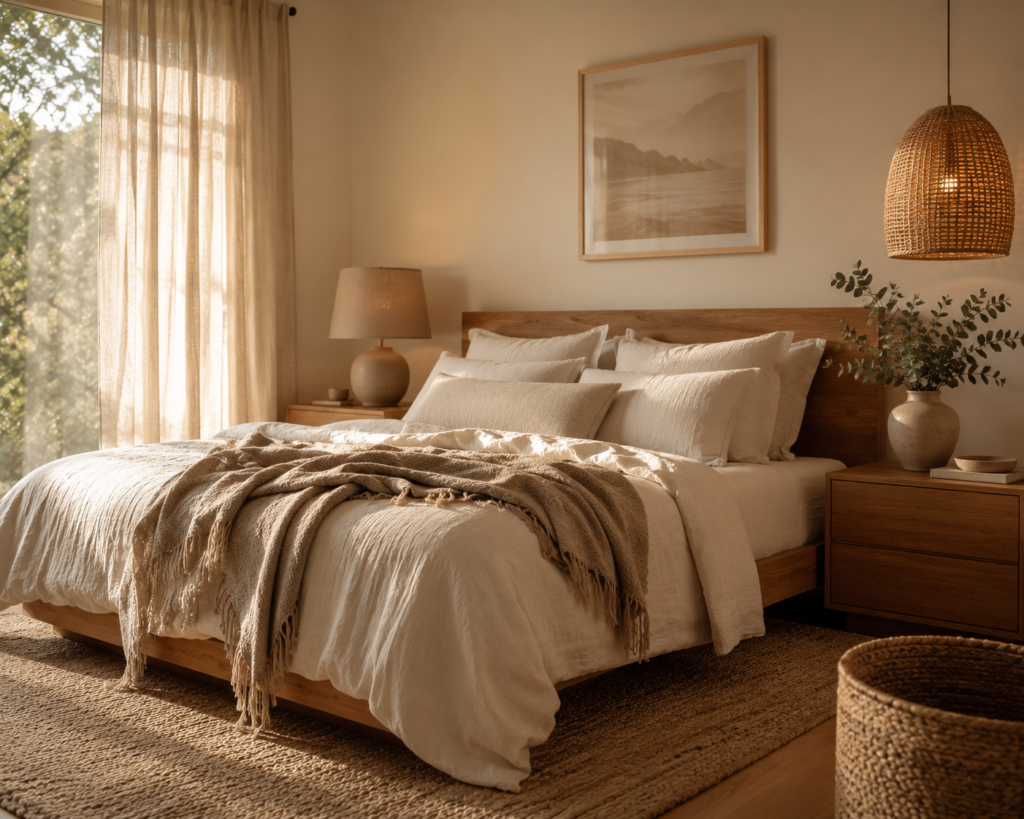
Linen bedding creates a relaxed look that improves with age rather than wearing out.
Timber
Oak, ash, walnut and reclaimed timber introduce warmth that painted furniture often lacks.
Whether it’s a dining table or floating shelves, natural wood instantly makes spaces feel more welcoming.
Stone
Travertine, limestone and marble continue growing in popularity because each piece is naturally unique.
No two surfaces are identical.
Wool
Throws, cushions and rugs made from wool add warmth while helping regulate temperature.
Ceramics
Handmade ceramics bring subtle imperfections that remind us objects don’t need to be flawless to be beautiful.
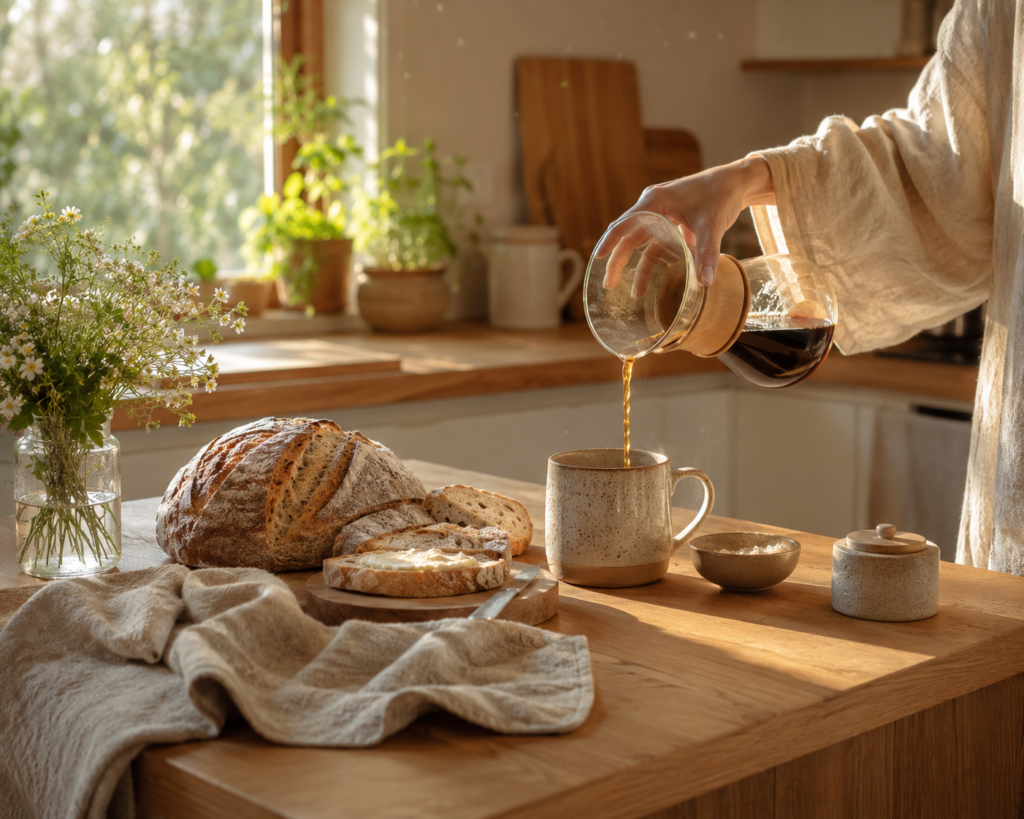
Designing With Less
One of the biggest misconceptions about minimalism is that it means empty rooms.
Slow living isn’t about owning nothing.
It’s about owning things you truly appreciate.
Instead of decorating every shelf, choose a few meaningful pieces.
Instead of ten inexpensive vases, display one handcrafted ceramic.
Instead of filling every wall, leave some breathing room.
This approach helps every object receive attention rather than competing for it.
Ironically, using fewer decorative items often creates a more luxurious feeling.
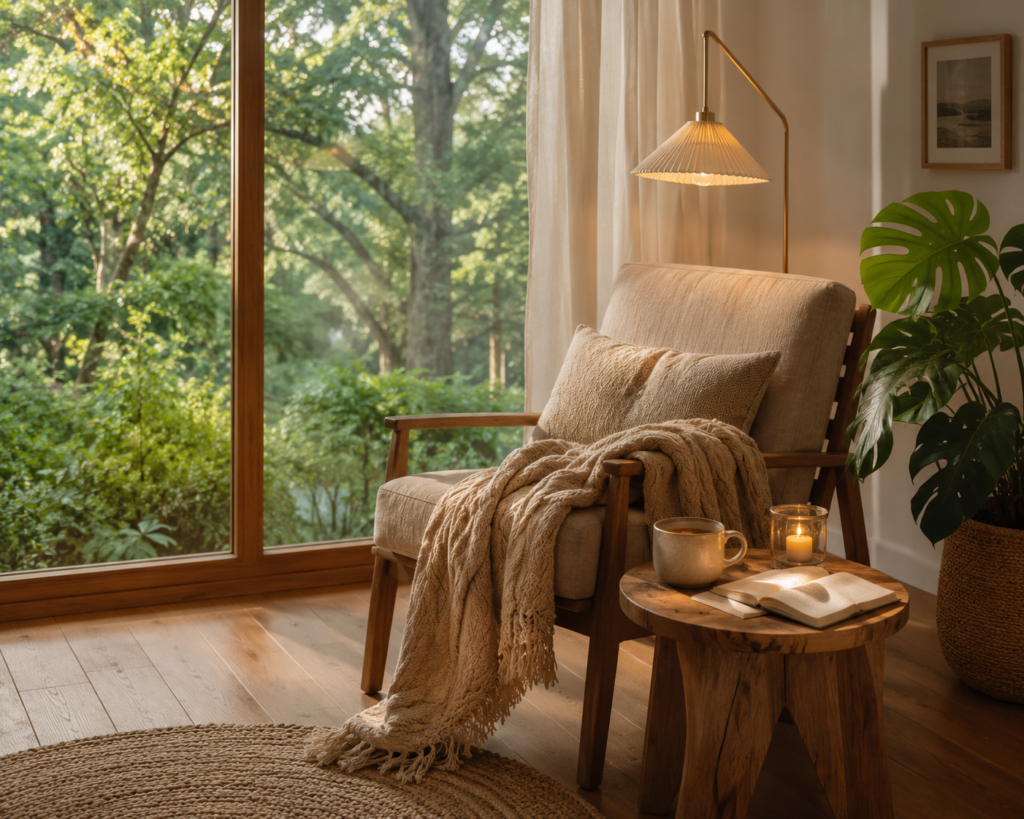
Bringing Nature Indoors
Biophilic design continues growing rapidly because people naturally feel calmer when surrounded by elements inspired by nature.
Adding greenery remains one of the easiest ways to transform a room.
Popular indoor plants include:
- Monstera
- Peace Lily
- Rubber Plant
- Fiddle Leaf Fig
- Snake Plant
- ZZ Plant
- Devil’s Ivy
Plants soften hard edges while improving the atmosphere of a space.
Even dried branches collected during a walk can become beautiful sculptural arrangements.
Natural materials don’t need to be expensive.
Sometimes the best décor comes from outside.
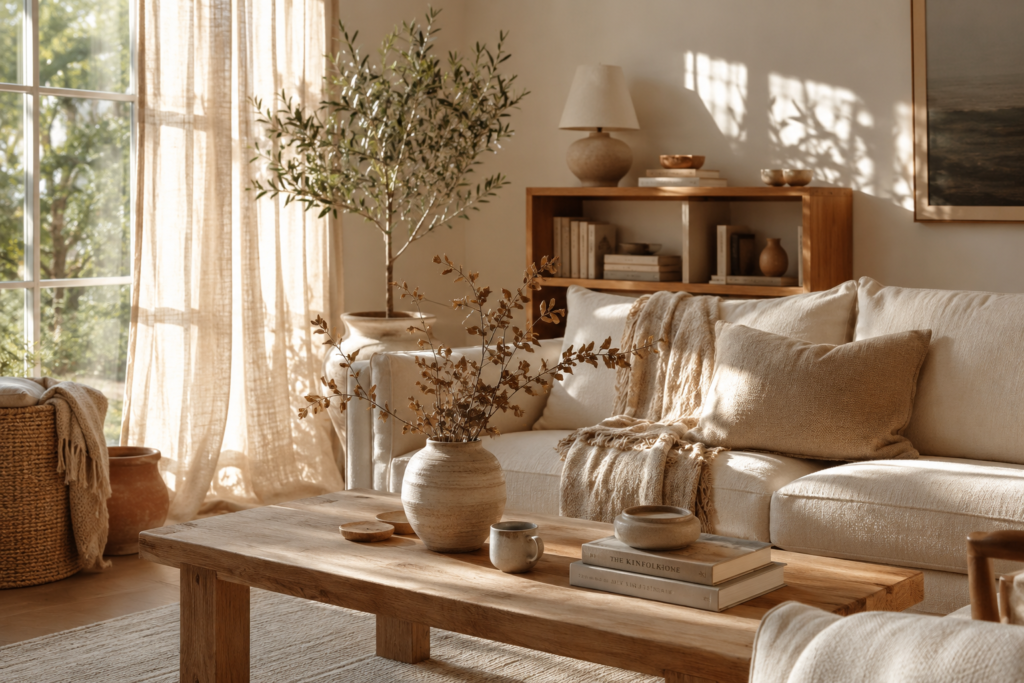
Lighting Changes Everything
Many people underestimate lighting.
Yet it’s one of the fastest ways to completely change how a room feels.
Slow living homes rarely rely on one bright ceiling light.
Instead they layer lighting throughout the space.
This might include:
- table lamps
- floor lamps
- candles
- wall sconces
- warm LED bulbs
- fairy lights
Warm lighting encourages relaxation, especially in the evenings.
Cool white lighting often feels clinical and is better suited to workspaces.
Decluttering Without Becoming Minimalist
Decluttering doesn’t mean throwing away everything you own.
Instead ask simple questions.
Does this item serve a purpose?
Does it make me happy?
Would I buy it again today?
If the answer is consistently no, it may be time to let it go.
Small improvements add up.
One organised drawer.
One tidy shelf.
One clear kitchen bench.
Gradually the entire home begins feeling lighter.
Small Spaces Can Embrace Slow Living Too
One of the best aspects of this movement is that it works anywhere.
Tiny apartments often benefit even more because thoughtful organisation becomes essential.
Choose multifunctional furniture.
Store items vertically.
Use mirrors to reflect natural light.
Keep colour palettes consistent throughout the home.
The result feels larger, calmer and more cohesive.
Five Amazon Finds That Complement a Slow Living Home
These products naturally fit within a slow living aesthetic and make great Amazon affiliate recommendations:
- Bamboo Bed Tray
- Linen Duvet Cover Set
- Ceramic Essential Oil Diffuser
- Woven Storage Basket Set
- Warm LED Edison Light Bulbs
Why Authentic Homes Are Winning Online
One noticeable shift across Pinterest and Instagram is the move away from picture-perfect interiors.
People increasingly engage with homes that feel lived in.
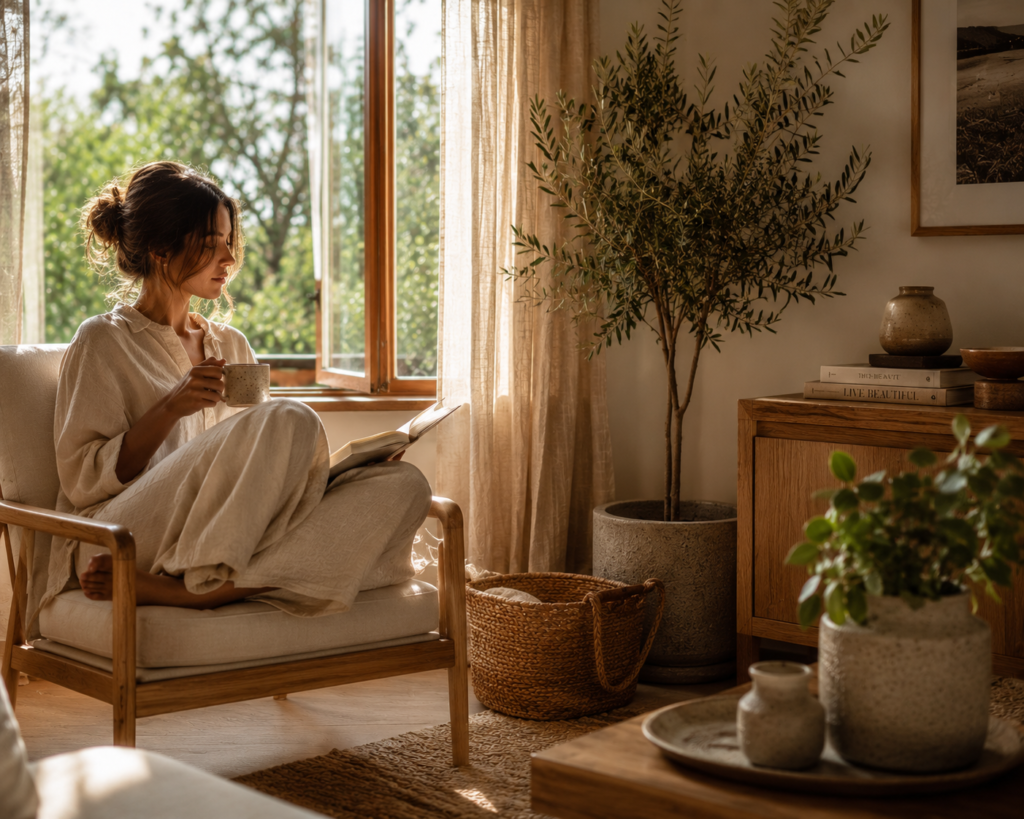
A coffee mug on a wooden table.
A blanket casually folded over a sofa.
Books stacked beside a reading chair.
Morning sunlight streaming through linen curtains.
These small moments create emotional connection.
People don’t just save beautiful rooms.
They save rooms they can imagine living in.
This is an important lesson for anyone creating content around home décor.
Rather than chasing perfection, focus on authenticity.
In the first part of this guide, we explored why slow living has become one of the defining lifestyle movements of 2026. We looked at the colours, textures, materials and mindset that are inspiring homeowners around the world to create spaces that feel calmer, warmer and more intentional.
Now it’s time to put those ideas into practice.
Whether you’re decorating a new home, refreshing a single room or simply looking for ways to make your everyday environment feel more peaceful, these ideas will help you embrace slow living without spending a fortune.
Remember, the goal isn’t to create a showroom. It’s to create a home that supports the life you want to live.
⸻
Designing Room by Room
One of the easiest ways to approach slow living is to focus on one space at a time. Small improvements throughout your home will have a much bigger impact than trying to completely redesign everything at once.
The Living Room
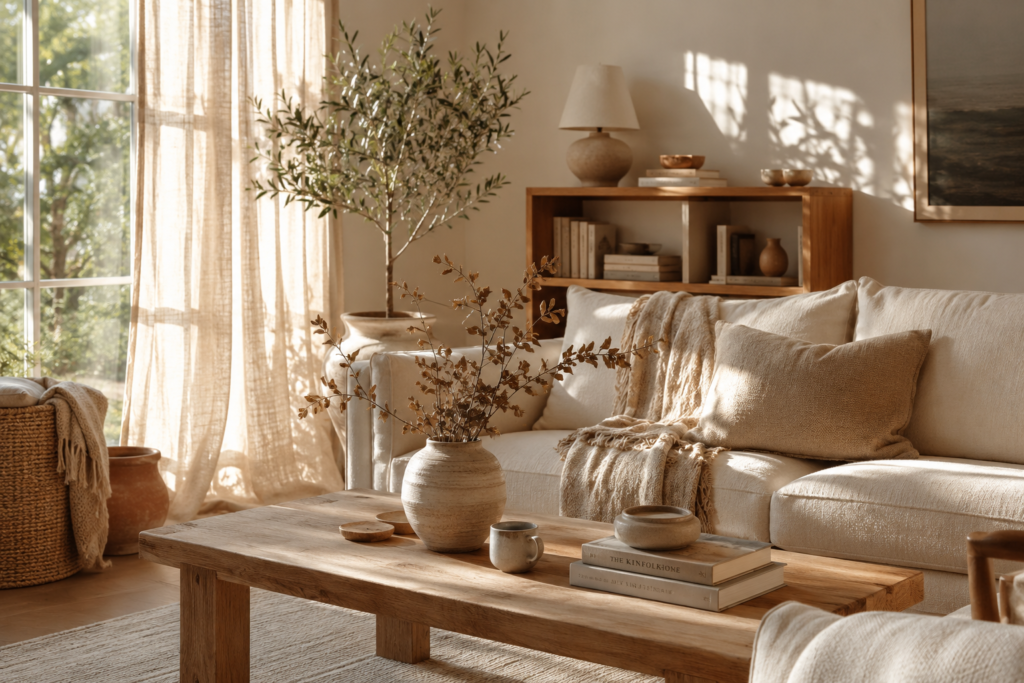
The living room has become more important than ever. It’s where we relax after work, spend time with family, read, entertain friends and often unwind at the end of a busy day.
Instead of filling the room with decorative objects, think about how the space feels.
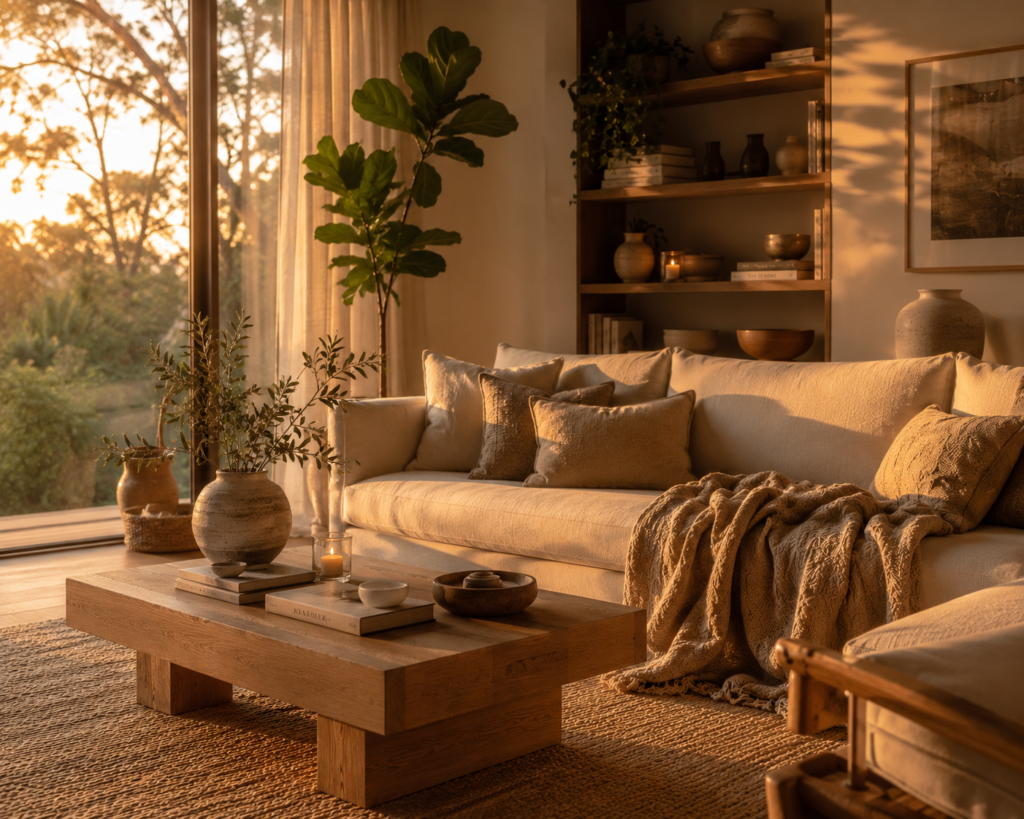
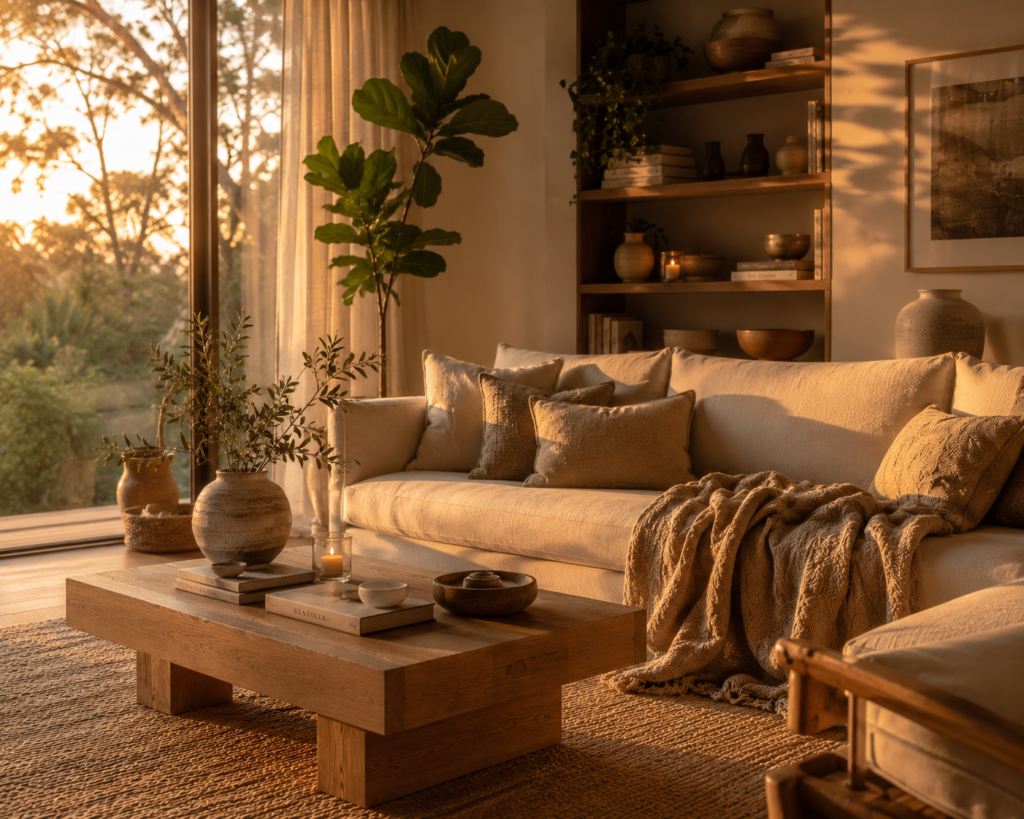
Start with comfortable seating that invites people to stay awhile. Add soft cushions in natural fabrics like linen or cotton and drape a textured throw blanket over the arm of the sofa. Introduce a timber coffee table or side table that showcases the beauty of natural materials.
Lighting is equally important. Replace harsh ceiling lights with floor lamps, table lamps and candles that create a warm glow in the evenings.
A living room doesn’t need dozens of decorations to feel complete. A stack of favourite books, a handcrafted ceramic vase, a bowl of fresh fruit or a leafy indoor plant often creates more character than shelves filled with ornaments.
⸻
The Bedroom
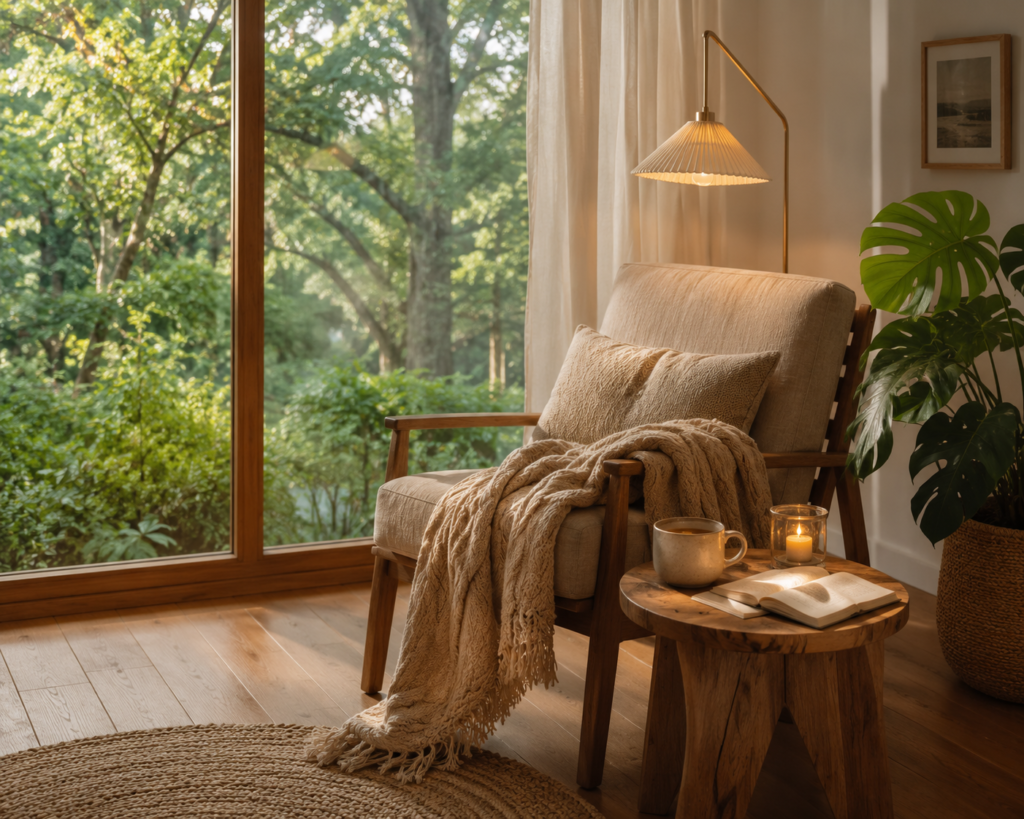
Your bedroom should be the most relaxing room in your home.
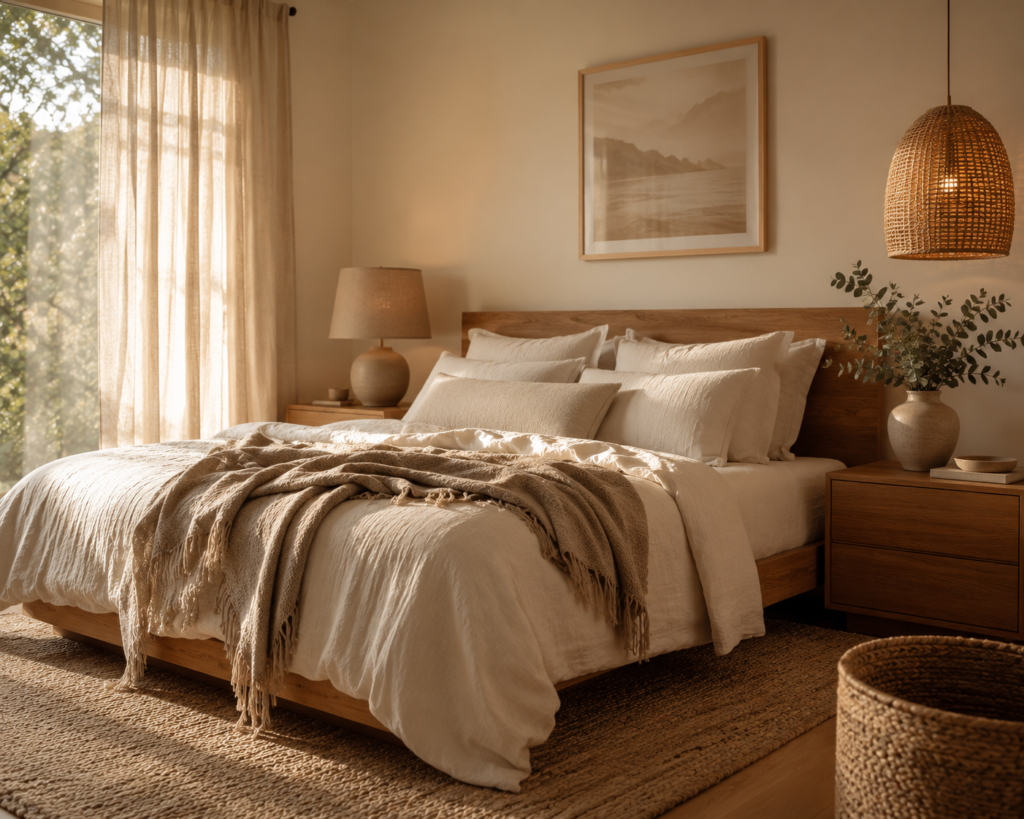
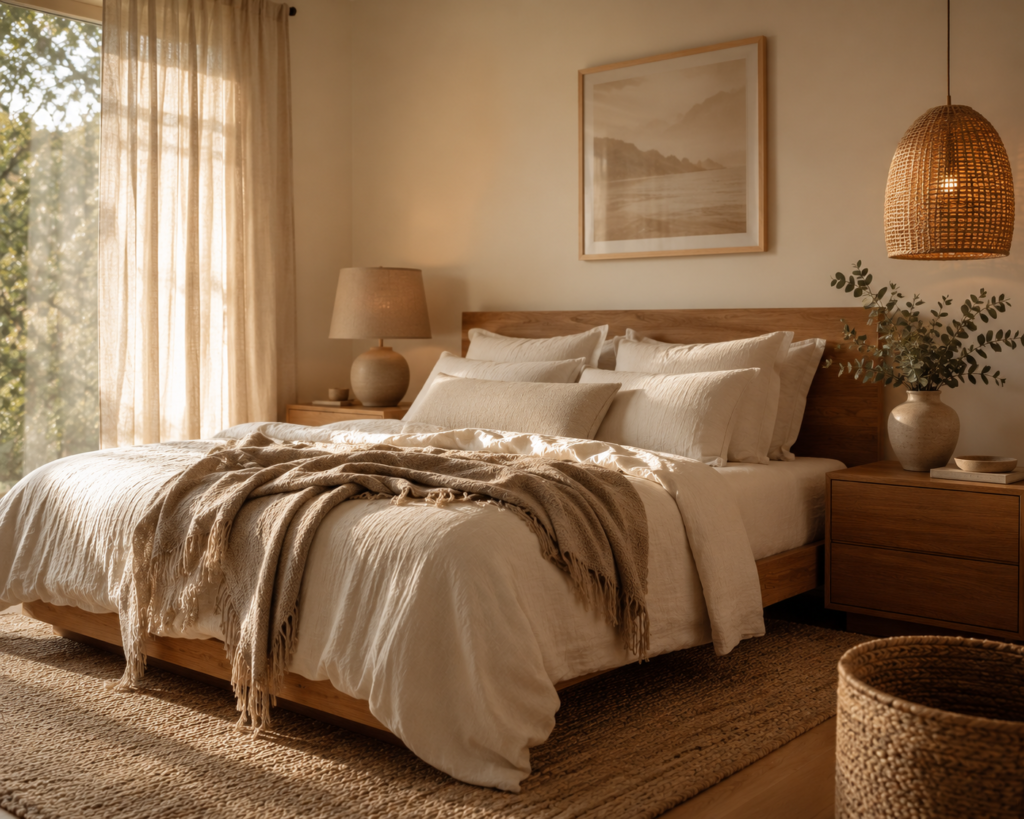
Choose breathable bedding in soft neutral colours and layer different textures rather than bold patterns.
Keep bedside tables simple with only the essentials:
- A warm bedside lamp
- A good book
- A small ceramic dish
- Fresh flowers or greenery
- A scented candle
Avoid filling the room with work equipment or unnecessary technology where possible. Creating a space dedicated to rest helps your mind switch off at the end of the day.
Natural light during the morning and soft lighting at night can also improve your sleep routine.
⸻
The Kitchen
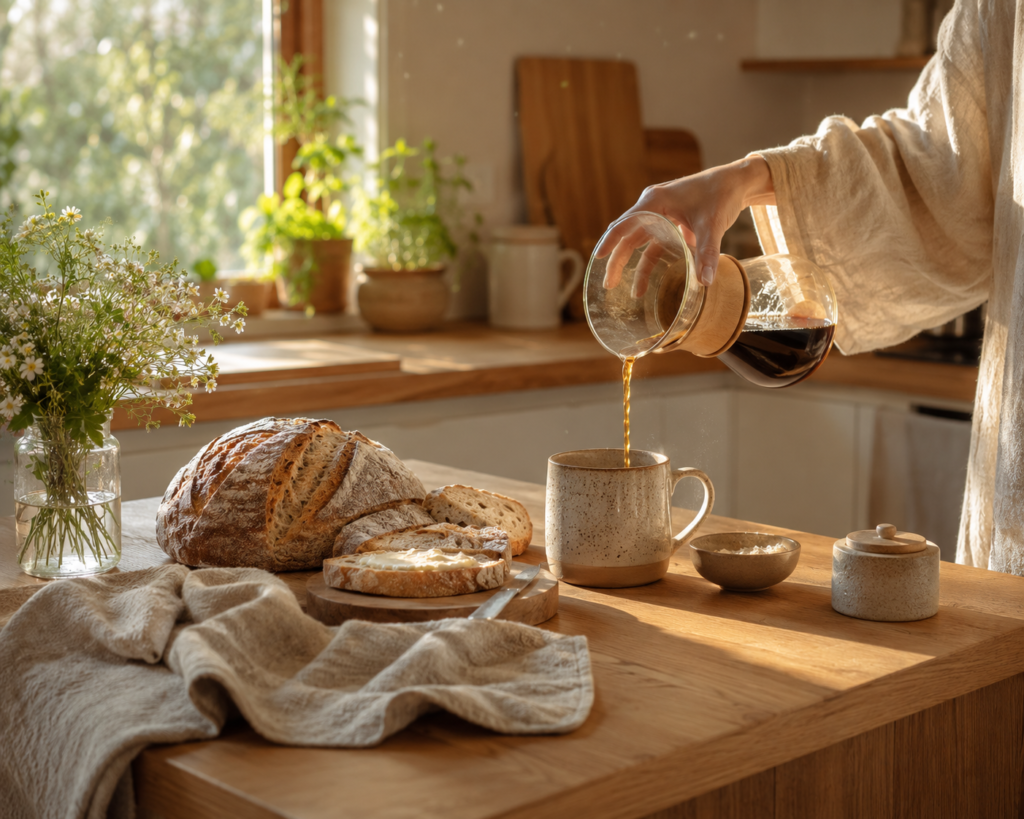
Slow living encourages cooking more meals at home and enjoying the process rather than rushing through it.
Simple changes can make your kitchen feel more welcoming.
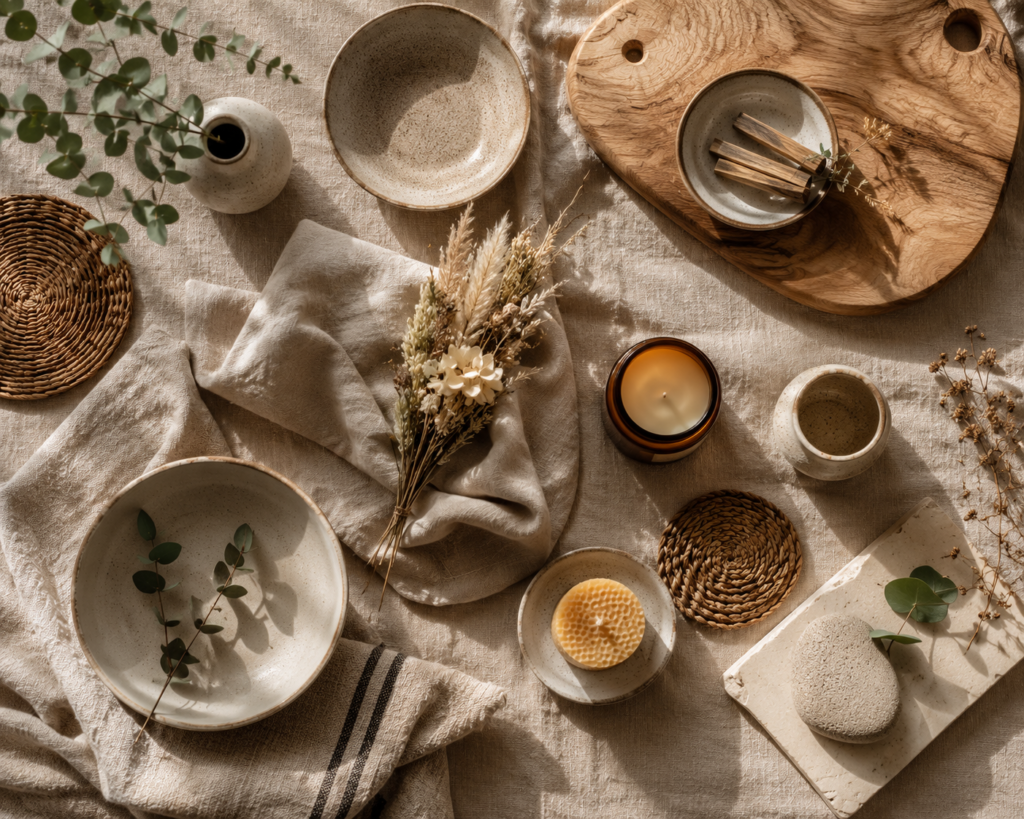
Store everyday utensils in ceramic containers.
Display wooden chopping boards instead of hiding them away.
Keep fresh herbs growing on a windowsill.
Use glass jars for pantry staples like pasta, rice, oats and coffee.
The goal isn’t perfection.
It’s creating a kitchen that encourages you to spend time preparing meals with intention.
⸻
The Bathroom
Bathrooms are often overlooked, but they’re one of the easiest rooms to transform.
Replace bright plastic accessories with natural materials.
Consider adding:
- Bamboo storage
- Rolled white towels
- Wooden bath tray
- Indoor plant
- Amber glass soap dispenser
- Woven baskets
Even small upgrades help create a spa-like atmosphere without requiring a full renovation.
⸻
The Home Office
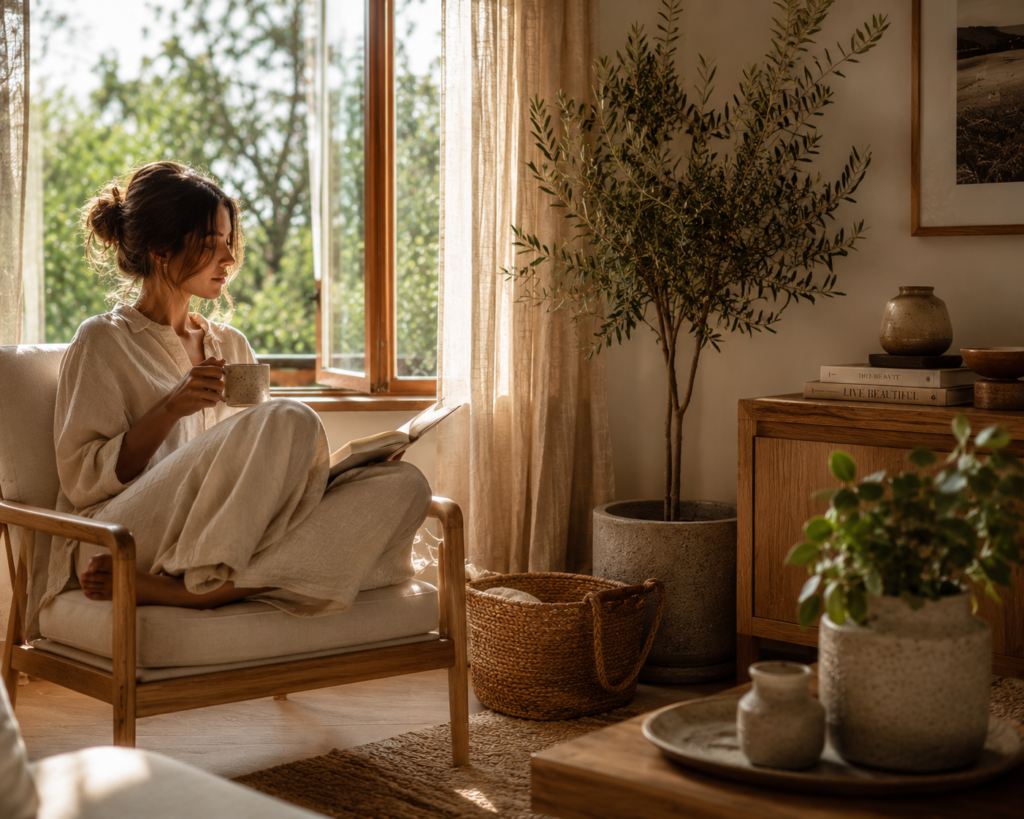
Many people continue working remotely throughout 2026, making home offices more important than ever.
A productive workspace doesn’t have to feel cold.
Add natural timber furniture, a comfortable chair, greenery and artwork that inspires creativity.
Keep your desk uncluttered by storing cables, notebooks and accessories in attractive storage containers.
Remember, a calm workspace often leads to a calmer mind.
⸻
Decorating on a Budget
One of the biggest myths about beautiful interiors is that they require expensive furniture.
In reality, some of the most charming homes have been created slowly over many years.
Here are some affordable ways to embrace slow living.
Shop Second-Hand
Vintage furniture often offers higher quality craftsmanship than many modern alternatives.
Look for timber tables, bookshelves, sideboards and chairs that can be refreshed with a little care.
Rearrange Before Buying
Sometimes simply moving furniture creates an entirely new feeling.
Try changing your layout before purchasing anything new.
Bring Nature Indoors
Branches, stones, flowers and plants can become beautiful decorations that cost very little.
Invest Slowly
Instead of buying an entire room at once, purchase one quality piece whenever your budget allows.
Over time you’ll build a home filled with items you genuinely love.
⸻
Creating Seasonal Homes Without Constant Shopping
One aspect of slow living that people appreciate is decorating with the seasons using simple, natural changes.
Spring
Fresh flowers
Light linen textiles
Open windows
Greenery
Summer
Natural woven baskets
Light cotton throws
Fresh citrus bowls
Indoor plants
Autumn
Warm blankets
Earthy ceramics
Dried foliage
Amber candles
Winter
Chunky knit throws
Soft lighting
Warm rugs
Timber accents
Seasonal decorating doesn’t require buying new collections every few months.
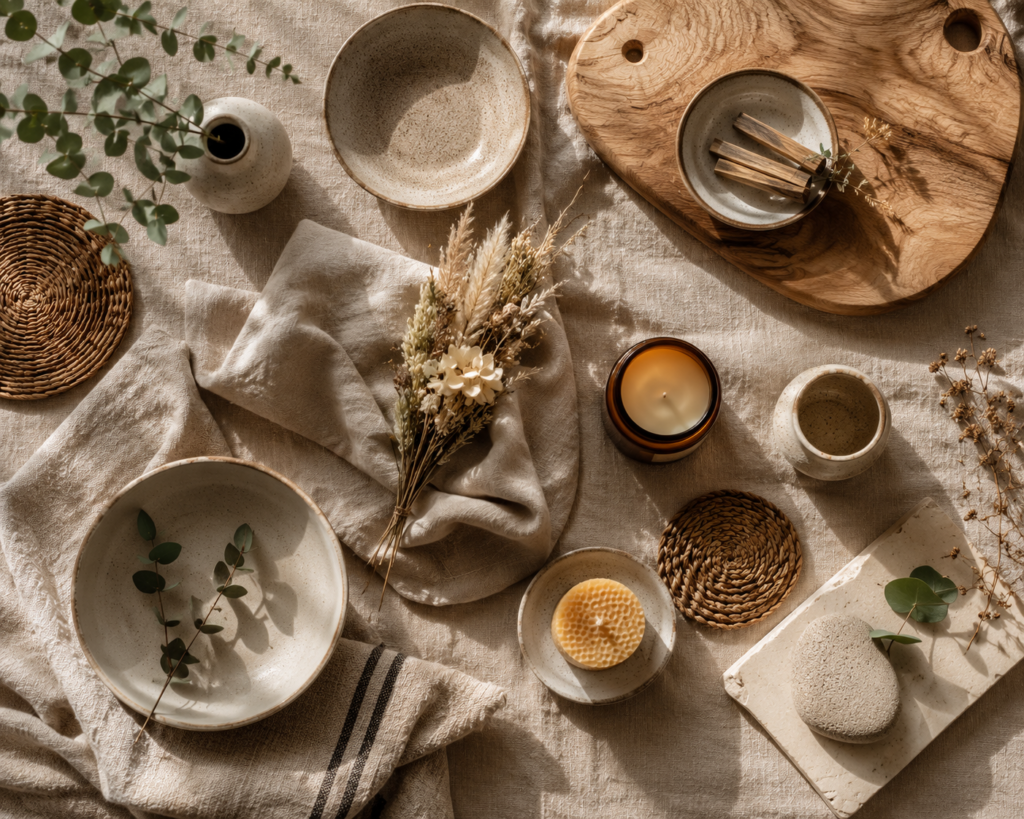
Often it’s simply about rotating what you already own.
⸻
Why Sustainability Matters
Slow living naturally overlaps with sustainability.
Buying fewer, higher-quality products often means:
- Less waste
- Longer product life
- Lower environmental impact
- Better craftsmanship
- More meaningful purchases
Rather than replacing décor every season, choose timeless pieces that continue looking beautiful year after year.
When possible, support local artists, small businesses and makers who create thoughtfully designed products built to last.
⸻
Common Decorating Mistakes
Even with the best intentions, it’s easy to make choices that prevent a space from feeling calm.
Here are some common mistakes.
Buying Everything at Once
Beautiful homes evolve over time.
Allow your style to develop naturally.
Following Every Trend
Not every popular trend will suit your lifestyle.
Choose ideas that genuinely resonate with you.
Ignoring Lighting
Lighting often has more impact than expensive furniture.
Always consider how your rooms feel during both day and night.
Too Much Clutter
Decorative items should have space to breathe.
Editing your shelves often makes them look better.
Forgetting Function
A beautiful room should also work for everyday life.
Comfort should always come before appearances.
⸻
The Future of Slow Living
As technology continues becoming more integrated into our lives, our homes will become even more important places of rest.
Future design trends are likely to include:
- More natural materials
- Sustainable manufacturing
- Multifunctional furniture
- Wellness-focused spaces
- Indoor gardens
- Energy-efficient lighting
- Handmade décor
- Timeless colour palettes
Rather than constantly chasing what’s new, homeowners are choosing products that tell stories and create lasting memories.
This shift isn’t likely to disappear anytime soon.
⸻
Five More Amazon Products That Fit the Slow Living Lifestyle
If you’re looking to gradually introduce the slow living aesthetic into your home, these products are popular additions that complement the style:
- Acacia Wood Serving Tray
- Handmade Ceramic Mug Set
- Linen Table Runner
- Reed Diffuser with Natural Essential Oils
- Indoor Plant Stand
⸻
Bringing Slow Living Into Everyday Life
Slow living isn’t only about decorating.
It’s about how we experience our homes.
Try beginning your morning without immediately reaching for your phone.
Open the curtains and let natural light fill the room.
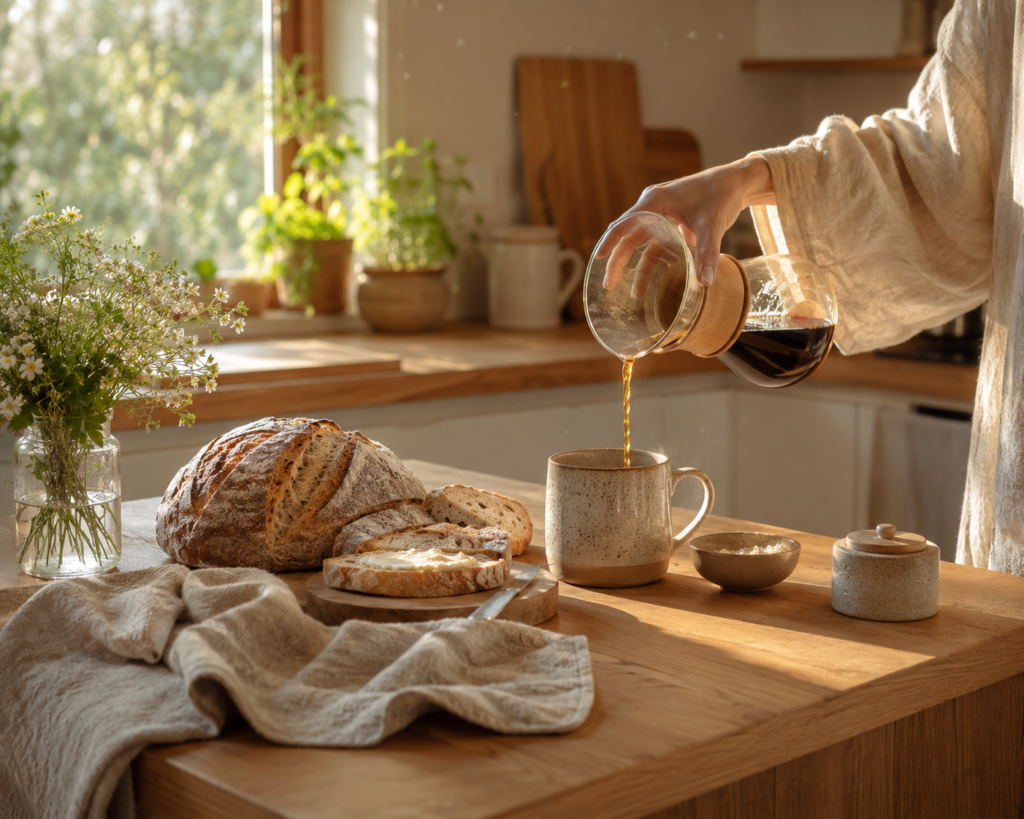
Enjoy your coffee slowly instead of rushing through it.
Play calming music while preparing breakfast.
Light a candle in the evening.
Read a chapter of a book before bed.
Spend a few minutes watering your plants.
These small rituals transform a house into a sanctuary.
The beauty of slow living is that it doesn’t require perfection. Life will still be busy. There will still be clutter from time to time, laundry waiting to be folded and dishes left in the sink after a family meal.
That’s okay.
A slow living home isn’t one that always looks perfect—it simply supports a more intentional way of living.
⸻
Final Thoughts
The growing popularity of slow living shows that people are searching for more than beautiful interiors—they’re searching for homes that help them feel grounded, comfortable and connected.
Whether you’re starting with a single plant, replacing bright lighting with warm lamps or gradually collecting timeless furniture, every thoughtful change contributes to a home that reflects who you are.
At The Natural Universe Collective, we believe that creating a beautiful home isn’t about following every trend or spending a fortune. It’s about surrounding yourself with pieces that inspire calm, celebrate nature and make everyday life a little more meaningful.
As you continue your own slow living journey, remember that the best homes are never finished. They evolve with the people who live in them, collecting stories, memories and cherished objects along the way.
Thank you for joining us on this exploration of one of 2026’s biggest lifestyle movements. We hope it inspires you to create a space that not only looks beautiful but truly feels like home.